
Key takeaways
What Makes Harris Tweed Unique
Harris Tweed is the only fabric in the world protected by its own act of Parliament, the Harris Tweed Act of 1993. Read on to discover what else sets the fabric apart in terms of pattern and feel in our guide to Types of Tweed.
Its Home: The Outer Hebrides
The Outer Hebrides are an island chain off the west coast of Scotland, including Lewis, Harris, the Uists, Benbecula and Barra. For centuries, tweed has been woven in this rugged, windswept landscape, known in Scottish Gaelic as Clò Mòr (the great cloth). For the islanders, who traditionally lived as small-scale farmers known as crofters, the fabric was long part of everyday life and self-sufficiency, and an important craft during the long winters.
Handwoven tweed became known to the wider public from the 1840s onwards, when Lady Dunmore, whose family owned the estate on Harris, introduced the fabric to her circle. In this way, the island craft found its way into the wardrobes of the aristocracy and later into fashion.
How Is Harris Tweed Made?
The production of Harris Tweed still follows strict steps, all of which take place in the Outer Hebrides.
Dyeing the wool. The pure virgin wool is first dyed. Various colours are then blended according to fixed recipes, giving the tweed its characteristic mottled appearance.
Carding and spinning. The blended wool is carded and spun into yarn in the islands' mills.
Preparing the warp. The yarn is wound onto warp beams and delivered to home weavers.
Handweaving at home. The weavers weave the fabric by hand on foot-powered looms without automation or electricity in their own homes.
Finishing and inspection. The woven fabric returns to the mill, is finished and then inspected by the Harris Tweed Authority and stamped with the Orb mark.
The colours of Harris Tweed
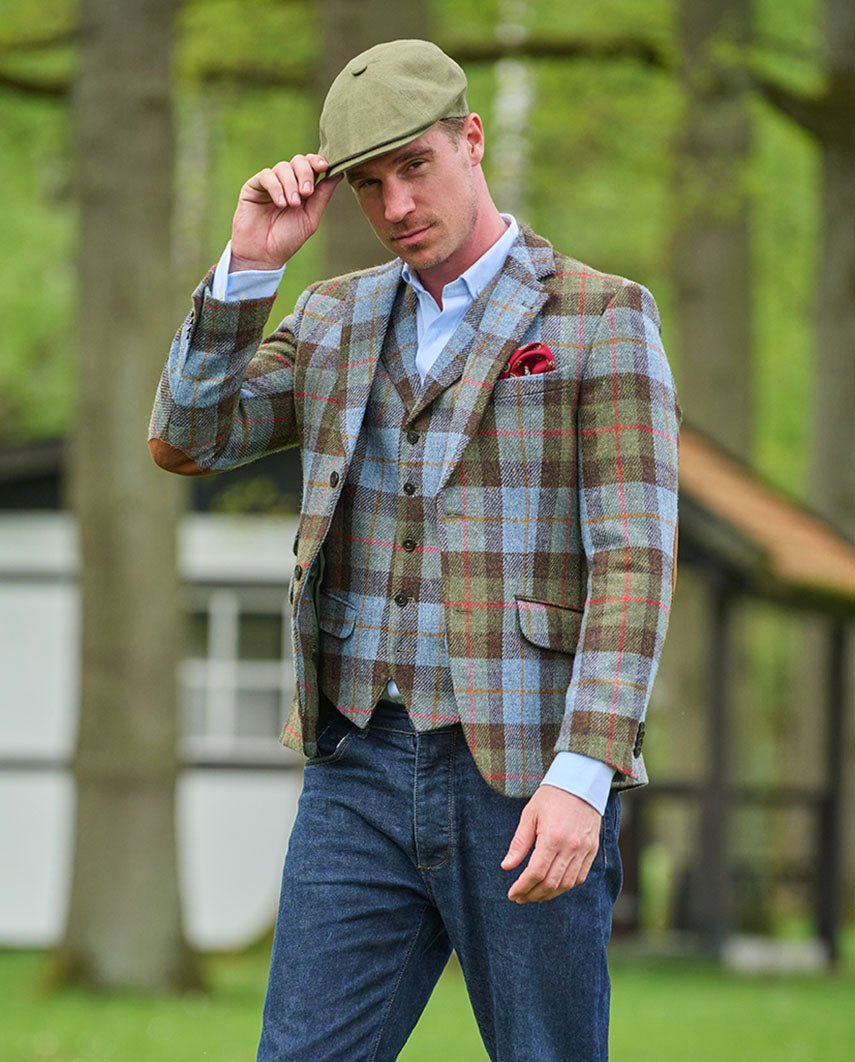
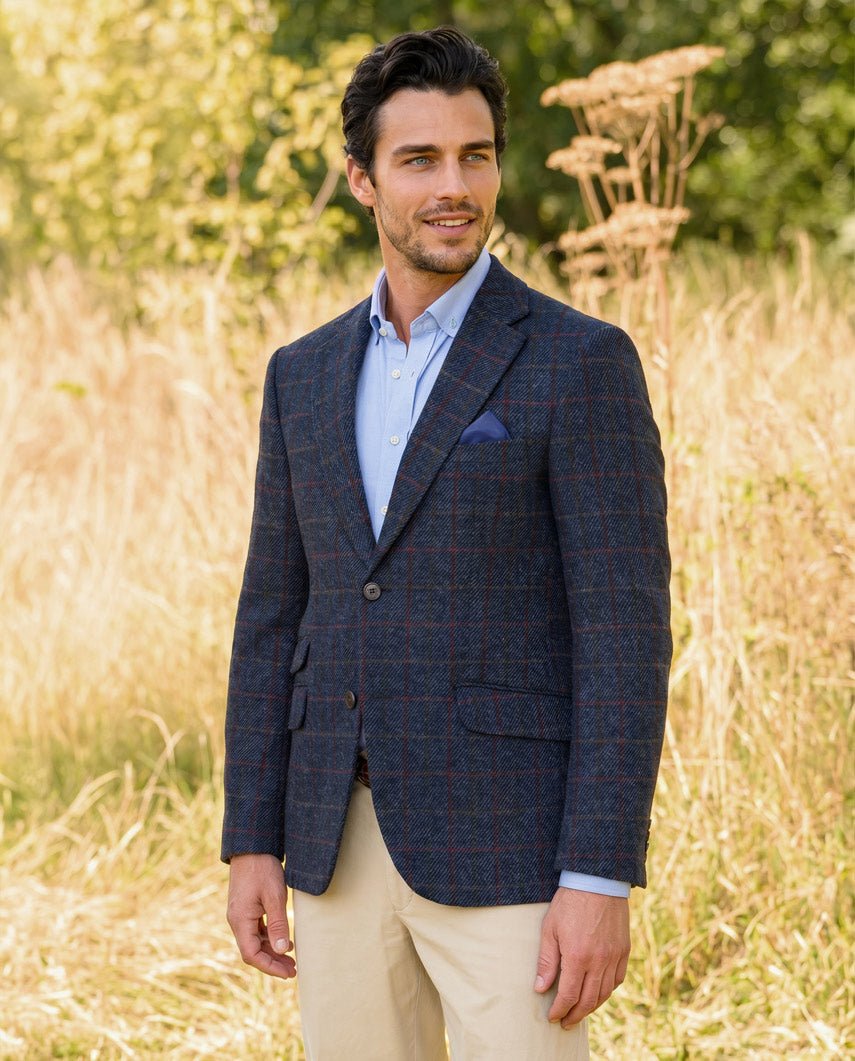
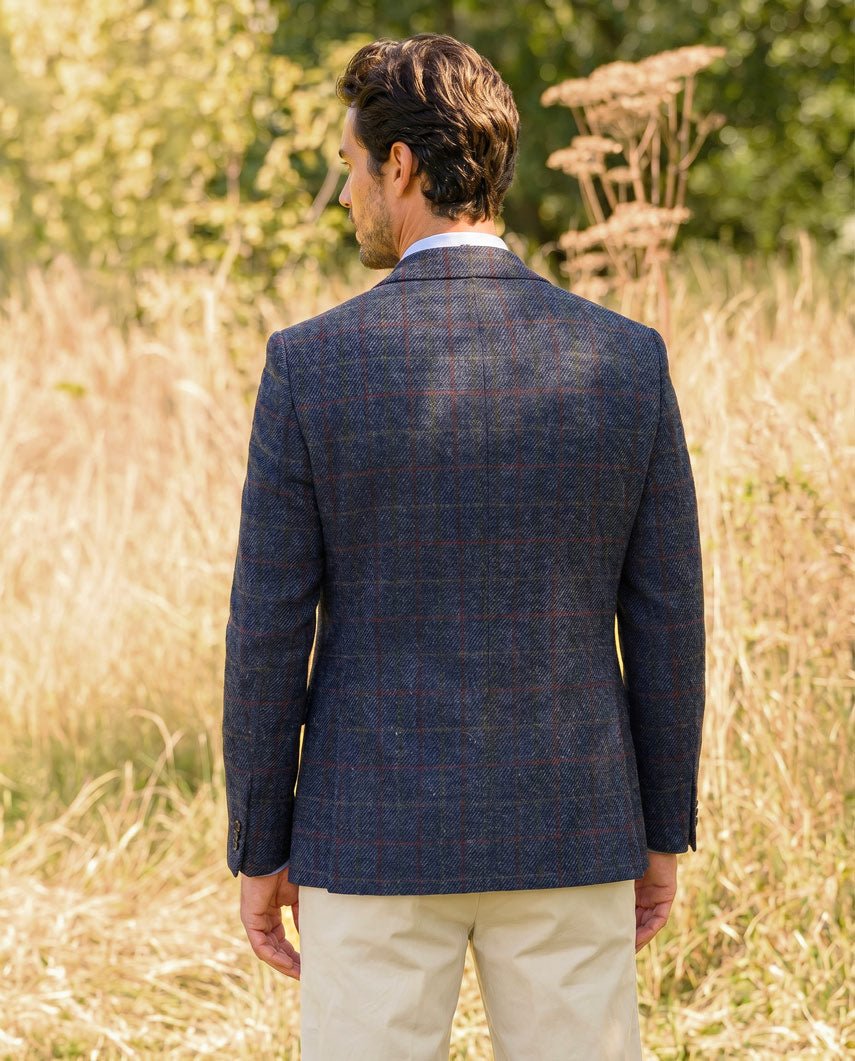
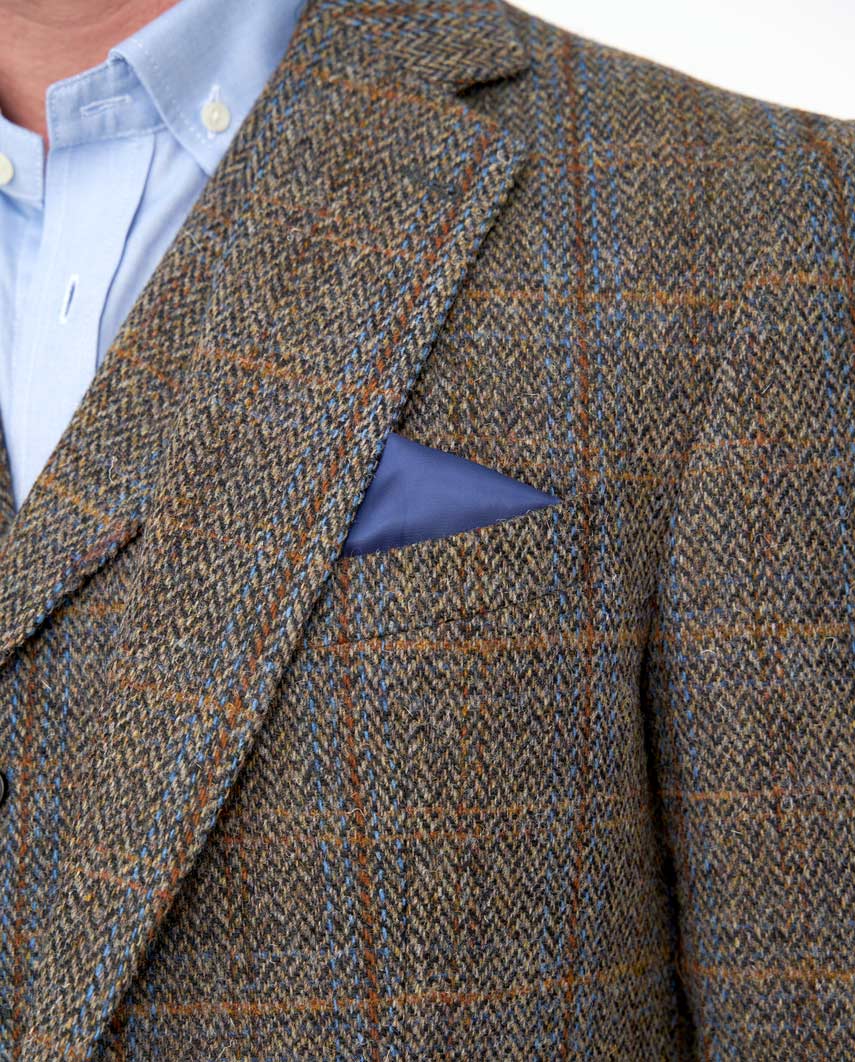
A hallmark of Harris Tweed is its mottled colour palette. Up close, a seemingly solid-coloured tweed reveals many subtle colour nuances blended from numerous individual shades. These colour combinations are often inspired by the islands' landscape, from heather and moorland to rock and sea.
Dozens of base colours can be combined to create a single shade, which is why no Harris Tweed is exactly alike.
Why can Harris Tweed only be woven in the Outer Hebrides?
The reason is the Harris Tweed Act of 1993. It requires that genuine Harris Tweed be handwoven by islanders in their own homes in the Outer Hebrides, finished there, and made from pure virgin wool that has been dyed and spun in the Outer Hebrides. The Harris Tweed Authority, a statutory body, oversees compliance.
This protection has a long history. The islanders formed the Harris Tweed Association as early as 1909, and the Orb mark was registered as a protected mark in 1910. In 1993, this protection was given a statutory basis, and the Association was replaced by today's Harris Tweed Authority. This ensures that production remains on the islands and the name is protected.
Who weaves Harris Tweed? The home weavers
Harris Tweed is not woven on a factory assembly line, but by self-employed home weavers in their own homes. They work at foot-powered looms, whose technology has remained largely unchanged for over a hundred years. This craftsmanship, combined with the work of the islands' dye works and spinning mills, is at the heart of the Harris Tweed tradition and is an important part of the local economy.
The Orb: Britain's oldest mark of authenticity
Every piece of Harris Tweed is inspected by the Harris Tweed Authority and then stamped by hand with the Orb mark, a royal orb with a cross. It is considered one of Britain's oldest marks of authenticity and can also be found as a sewn-in label in finished garments. Read our guide to Identifying Harris Tweed to discover how to recognise genuine Harris Tweed. Wellington of Bilmore exclusively uses genuine Harris Tweed bearing this mark of authenticity.

Harris Tweed mark of authenticity on the Wellington of Bilmore jacket
What makes Harris Tweed so durable?
There are several reasons for the durability of Harris Tweed. The fabric is made from pure virgin wool, which is naturally robust and warm. The dense, handwoven fabric is resistant and withstands the elements. Over time, Harris Tweed develops its own patina and often becomes a favourite piece worn for generations. In this way, a single purchase becomes an investment for many years.
Harris Tweed and sustainability
Harris Tweed is considered a relatively sustainable fabric. It is made from pure virgin wool, a renewable and biodegradable natural material. Production relies on natural raw materials and low-energy, handcrafted weaving on foot-powered looms. Its long lifespan is another advantage: a garment made from Harris Tweed is designed to last for years and decades, meaning it needs to be replaced less often.
Harris Tweed today
Despite industrial textile production, Harris Tweed is still handwoven today and experienced a renaissance in recent decades. The fabric is in demand worldwide, from classic menswear to modern accessories. In the Outer Hebrides, production is an important part of the local economy and preserves the craft of home weaving.
Harris Tweed in fashion
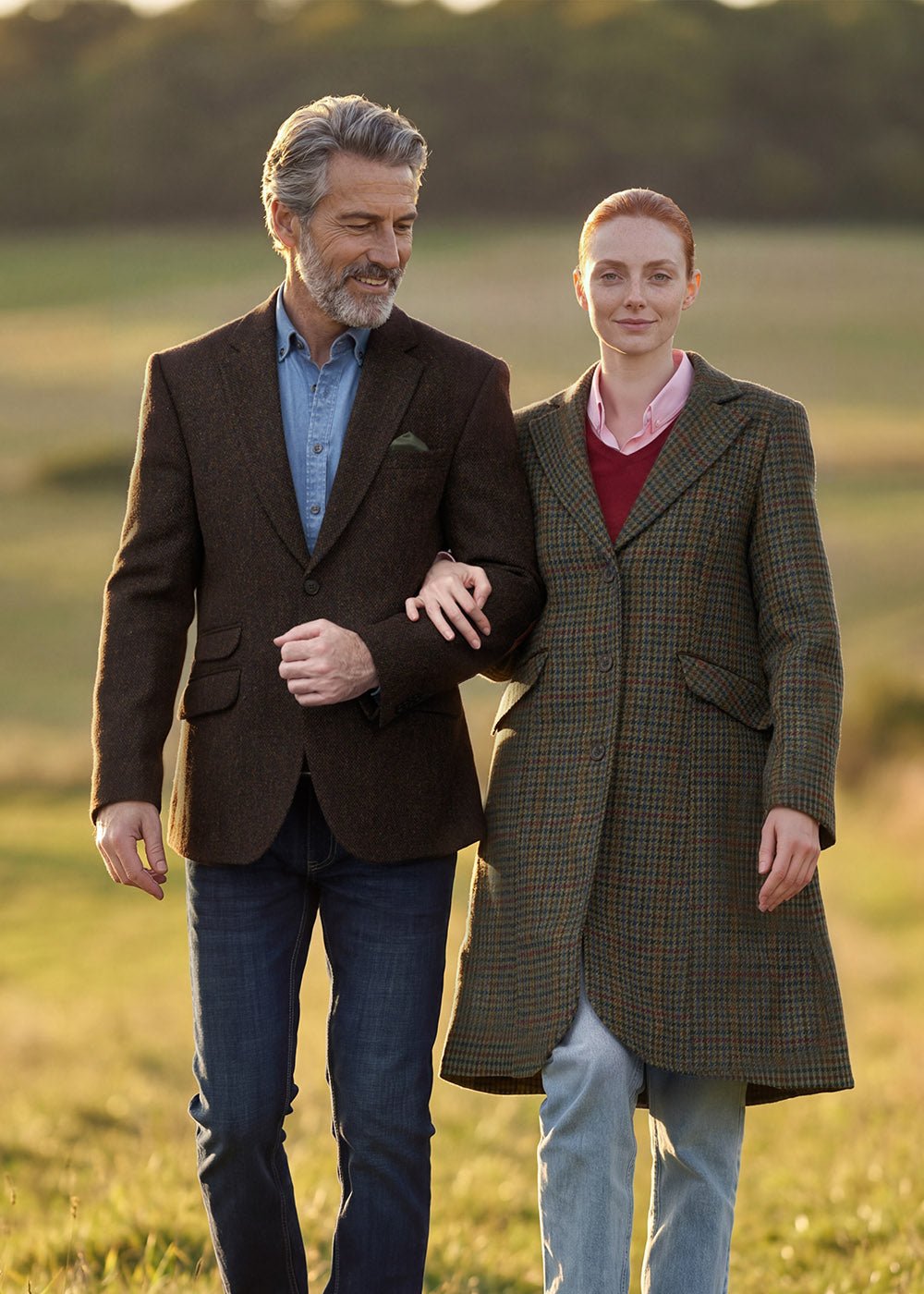
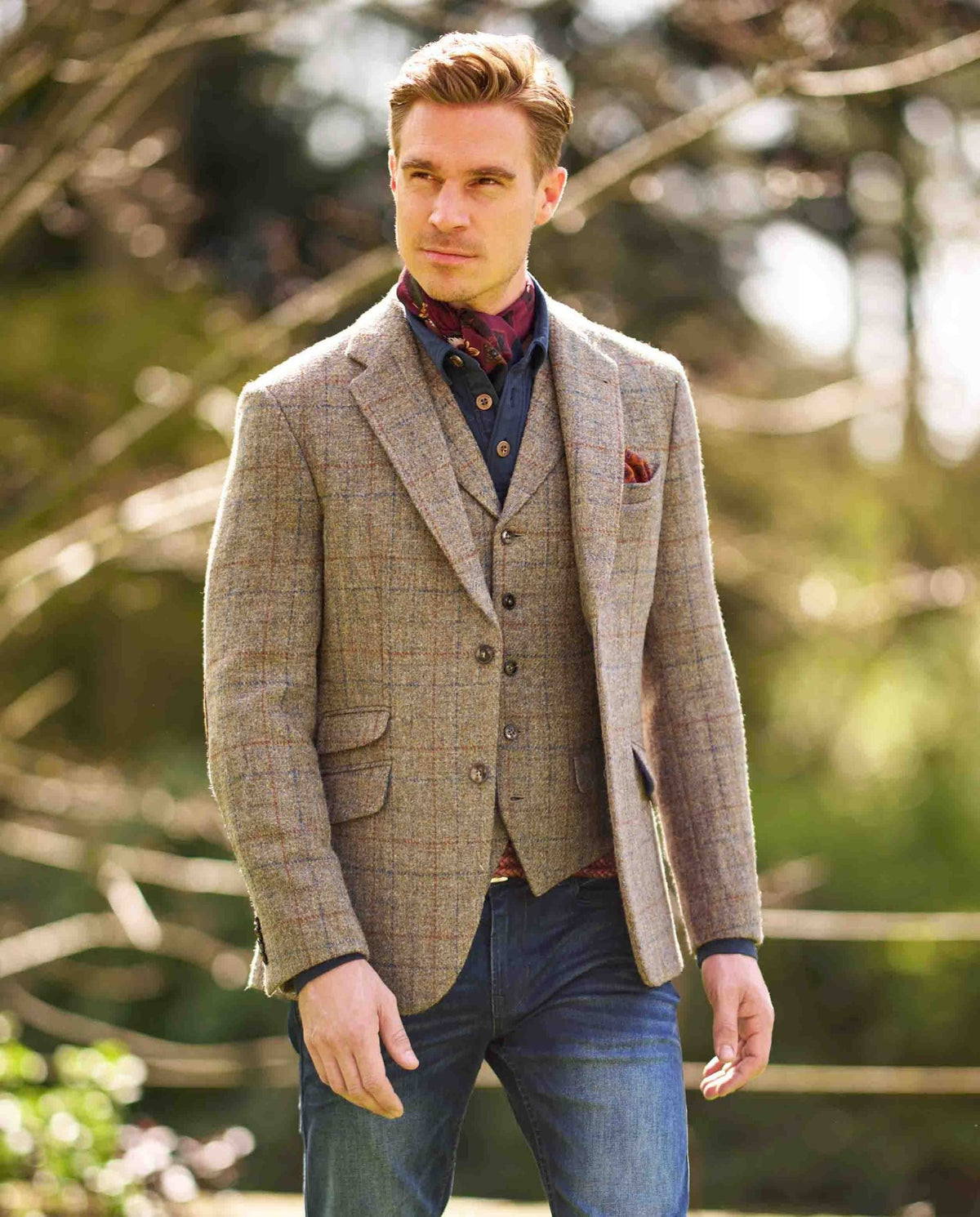
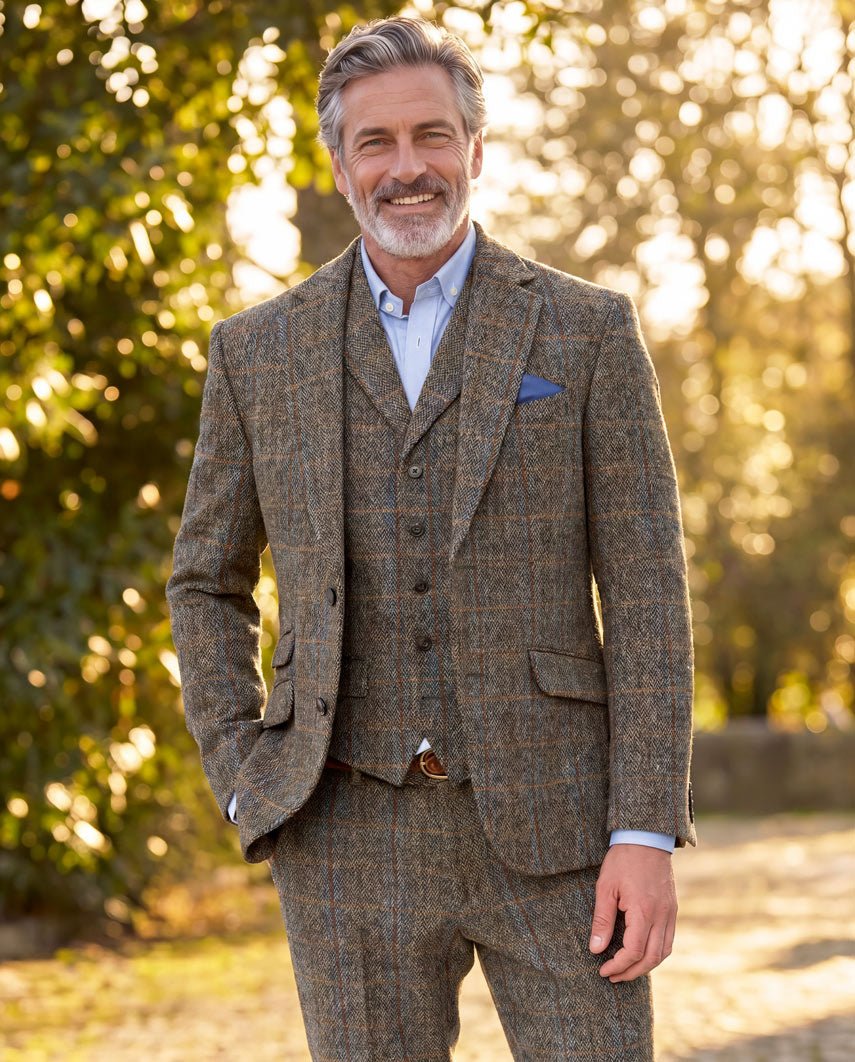
In fashion, Harris Tweed has become a classic, particularly in jackets and blazers. Its warmth and durability made it an early favourite for country life, hunting, equestrian sports and long days outdoors. This functional heritage gave rise to a style: the Harris Tweed jacket remains a cornerstone of the British-inspired wardrobe. Harris Tweed has long also been appreciated in womenswear, for example in blazers, coats and skirts. Read our guide to Hunting and country pursuits to discover how the fabric made its way from hunting and country pursuits into the wardrobe. Read our Harris Tweed style guide to discover how to style Harris Tweed.

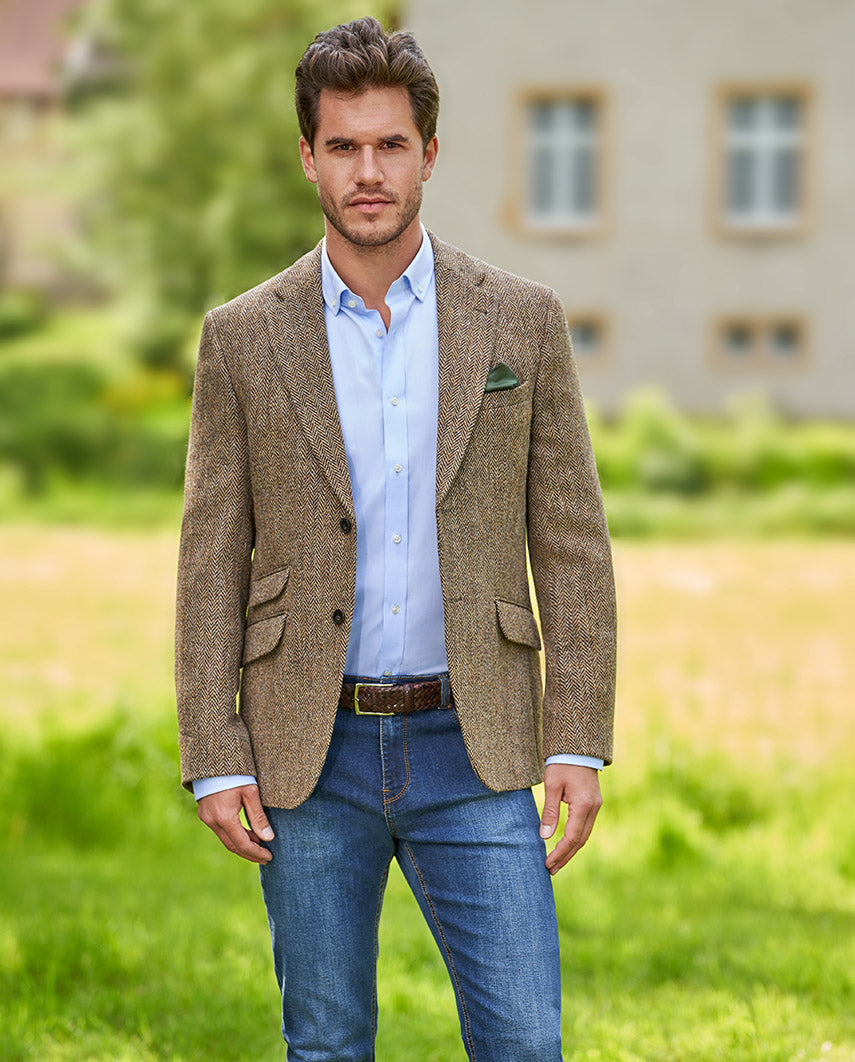
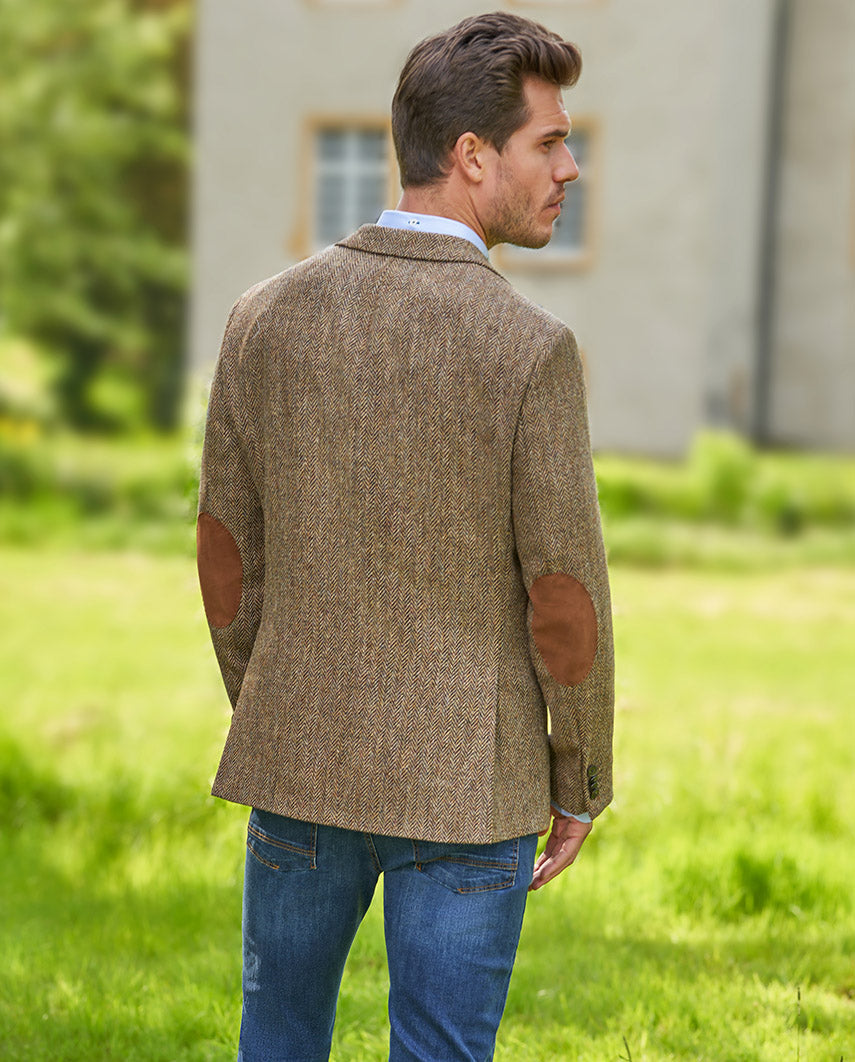
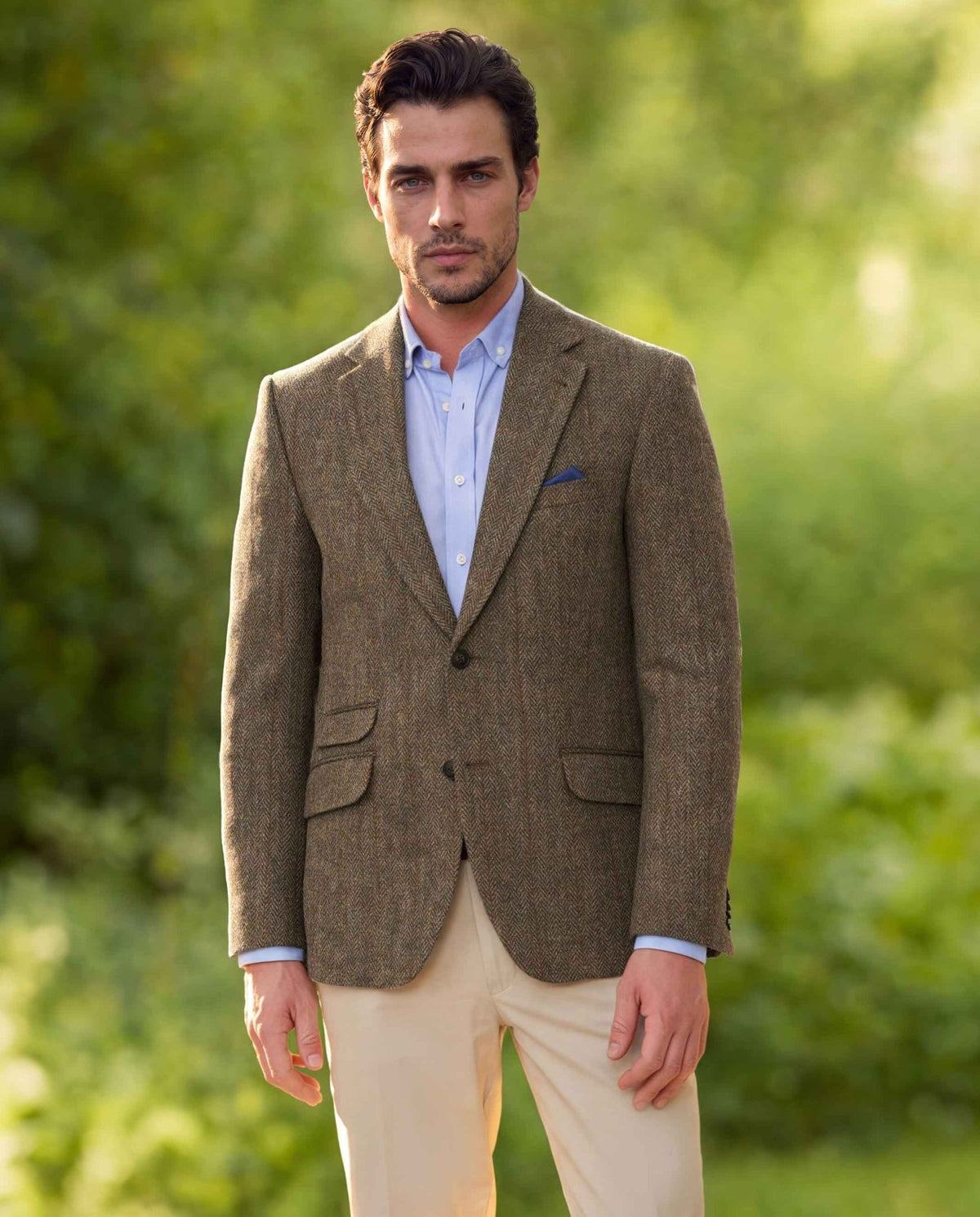
Harris Tweed "London" jacket in herringbone check
From the Hebrides to Wellington of Bilmore
The journey of Harris Tweed does not end on the islands, and this is where Wellington of Bilmore comes in. The company traces its origins to a clothing factory founded in 1899 in Werther, in Westphalia, and today is run by the fifth generation, Moritz Meyer zu Erpen. The Wellington of Bilmore collection itself was launched in 1984 in a British-inspired style. From the outset, it has stood for high-quality materials, with a particular focus on genuine Harris Tweed. Only tweed bearing the Orb mark of authenticity is used.
During production, a piece of tweed is transformed into a garment. Wellington of Bilmore combines Scotland's material heritage with German precision in tailoring. The company describes this approach as "German engineering meets British style". Meticulous interior finishing, functional details and a fit tailored to the DACH region transform the robust fabric into garments that fit well and will accompany you for many years.
Thus, the circle is completed from the Outer Hebrides to Werther. Pure virgin wool that has been dyed, spun and handwoven on the islands is transformed into a Harris Tweed jacket designed to last for many years. The company sums up this commitment in the words "crafted for living and for life".
Harris Tweed by Wellington of Bilmore
Wellington of Bilmore focuses on genuine Harris Tweed and combines Scotland's material heritage with German precision in tailoring. From jackets and waistcoats to coats, the fabric represents tradition, quality and durability.
Frequently asked questions about the Harris Tweed story
How is Harris Tweed made?+
The wool is dyed, blended, carded and spun in the Outer Hebrides. Home weavers then handweave the fabric on foot-powered looms. It is then finished, inspected and stamped with the Orb mark.
Why can Harris Tweed only be woven in the Outer Hebrides?+
The Harris Tweed Act of 1993 requires that genuine Harris Tweed be handwoven by home weavers in the Outer Hebrides, as well as dyed, spun and finished there.
Who weaves Harris Tweed?+
Harris Tweed is woven by self-employed home weavers in their own homes in the Outer Hebrides on foot-powered looms.
How does tweed get from the islands into ready-made clothing?+
After weaving, the fabric is finished, inspected and stamped by the Harris Tweed Authority. Then companies such as Wellington of Bilmore transform the fabric into jackets, waistcoats and coats.
What makes Harris Tweed so durable?+
Pure virgin wool and a dense, handwoven fabric make Harris Tweed robust and weather-resistant. Over time, it develops its own patina and can be worn for many years.
What does the Orb mark mean?+
The Orb mark, a royal orb with a cross, is the protected mark of the Harris Tweed Authority. It is stamped by hand on every inspected piece of fabric and can be found as a sewn-in label in genuine Harris Tweed garments. It is considered one of Britain's oldest marks of authenticity.
How do you care for Harris Tweed?+
Harris Tweed is robust and easy to care for. Air out a jacket regularly, brush it gently and take it to a professional cleaner when necessary. Carefully dab stains instead of rubbing them. This will keep the fabric looking beautiful for many years.