
Key takeaways
What types of checks are there?
Checks differ in size, colour and origin. Here is a brief overview of the most important types, explained in detail in the guide to tweed patterns.
-
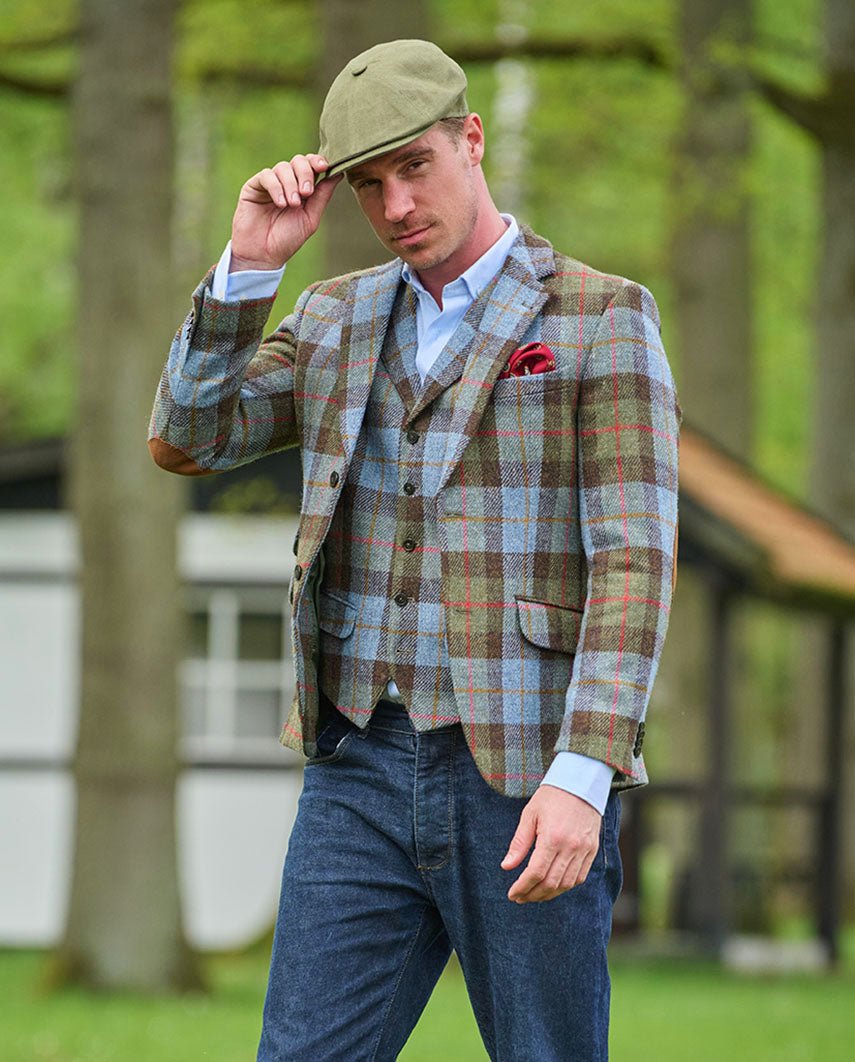
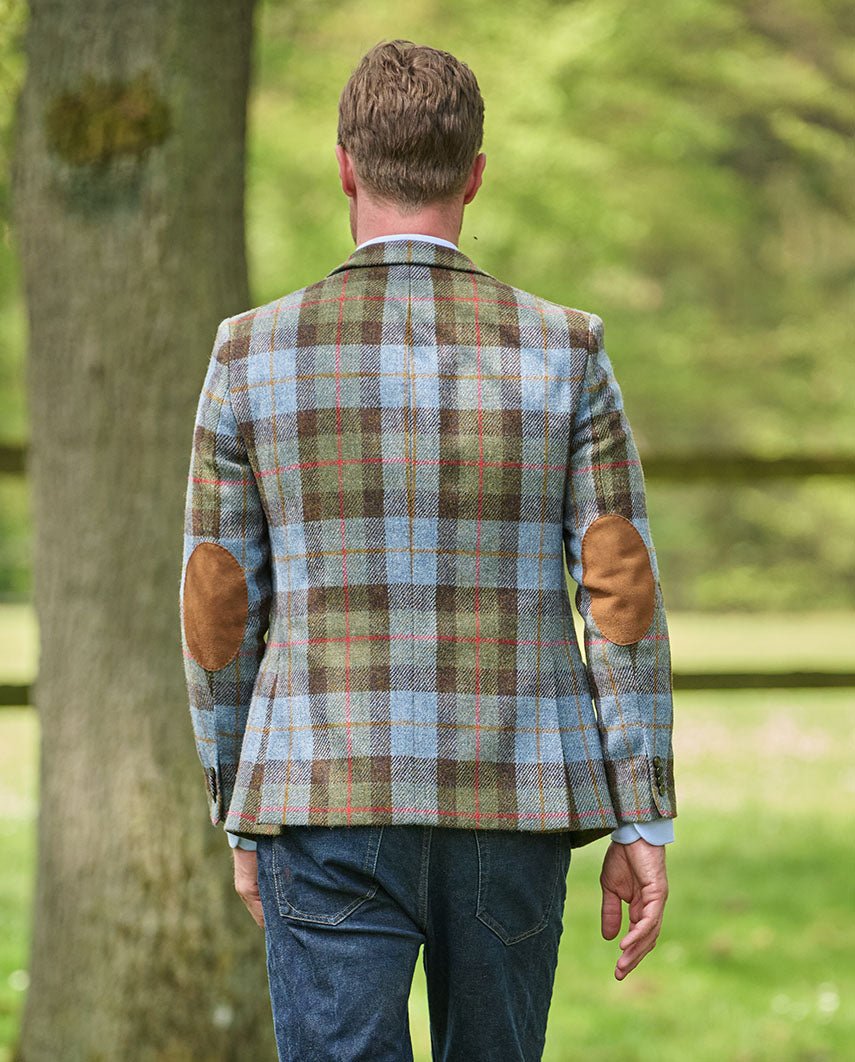
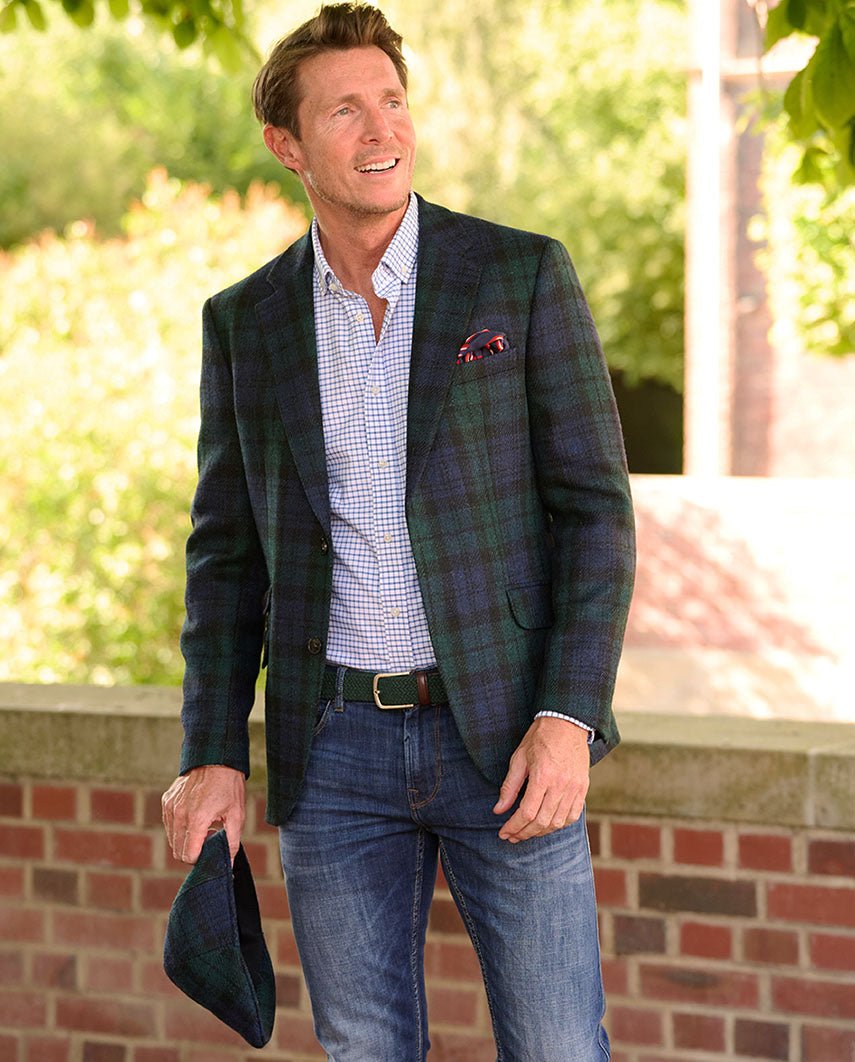
Tartan: a bold, multicoloured Scottish check with clan associations, such as the dark Black Watch.
-
Glencheck: a fine, subtle check, often with a delicate overcheck (Prince of Wales), ideal for the office.
-
Tattersall: a fine grid of two colours on a light background, classic for country shirts and waistcoats.
-
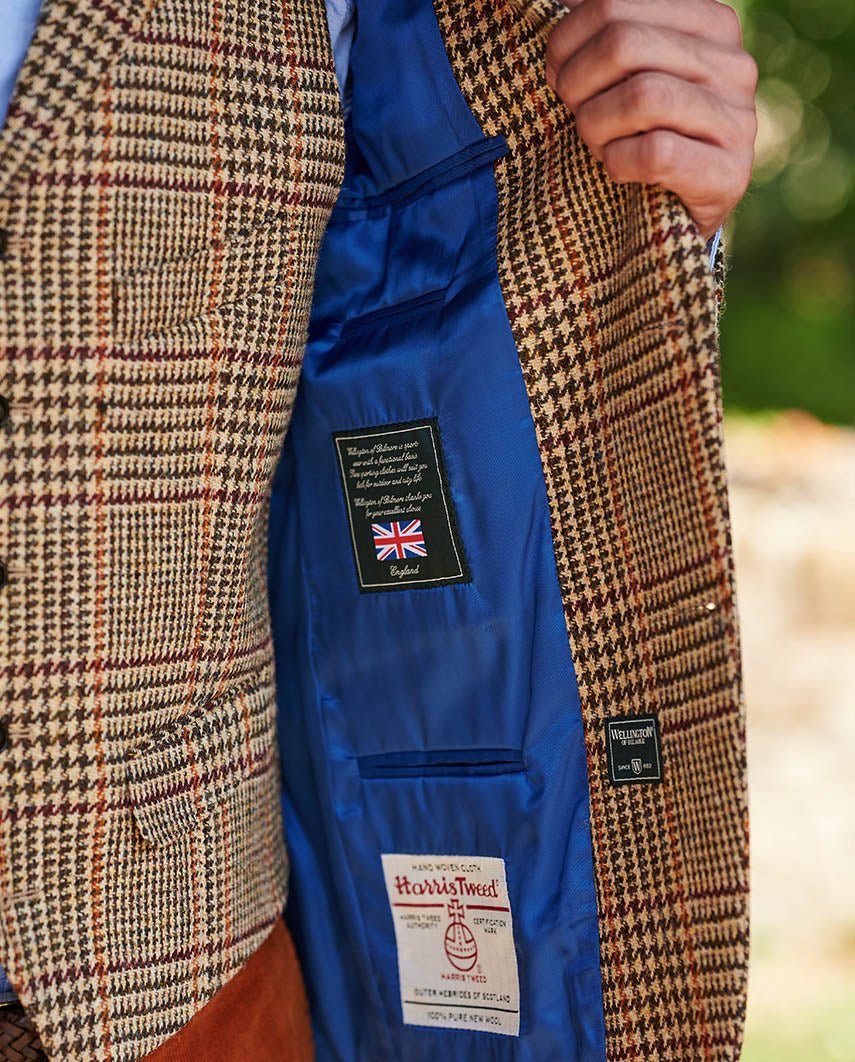
Houndstooth: a small, broken check with a jagged structure, also known as Pied de poule.
-
Vichy: an even two-colour check on white, casual and summery.
-
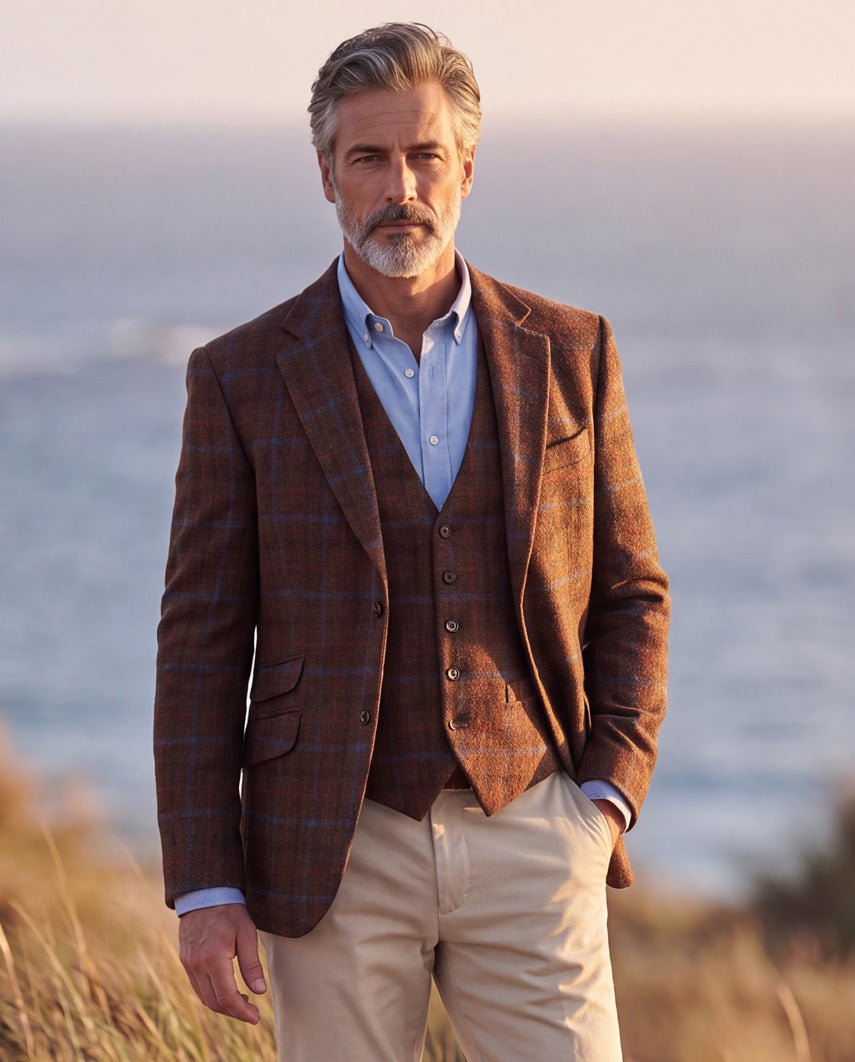
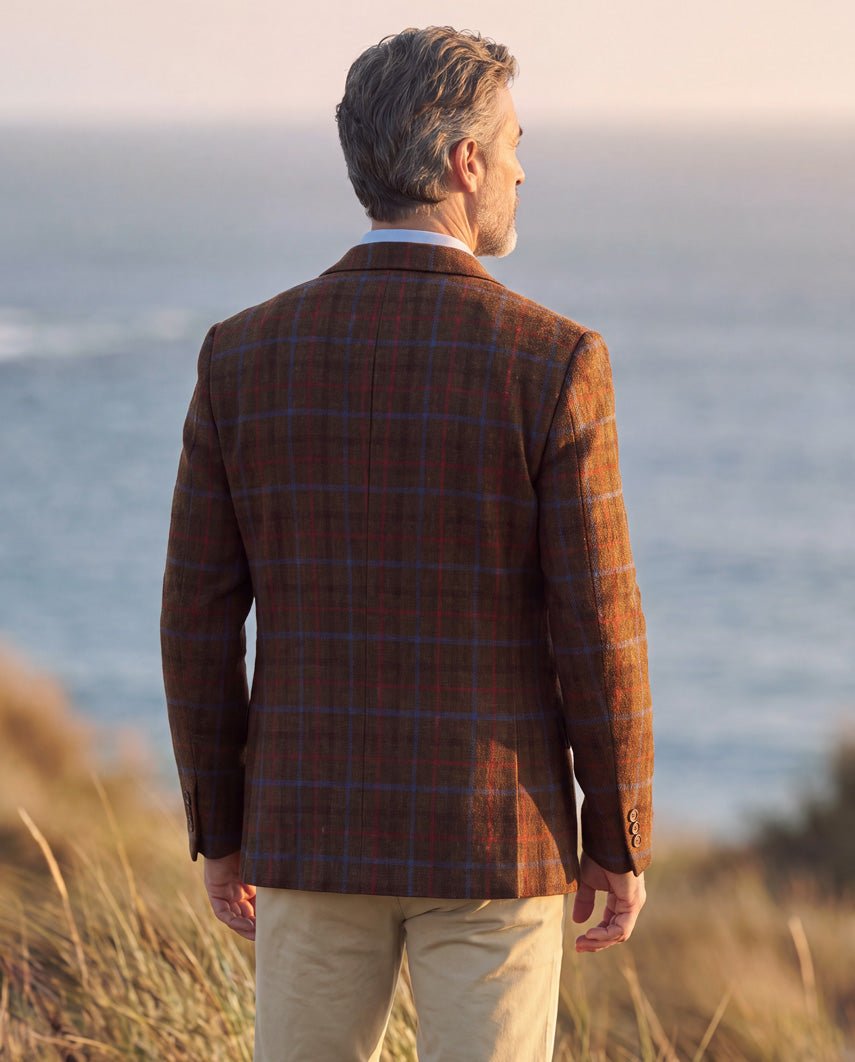
Windowpane: large, thin lines like window frames, striking and modern.
What is Tattersall?
Tattersall refers to a regular grid pattern of thin lines in two alternating colours on a light background. Its name comes from the London horse market Tattersall, where similarly patterned horse blankets were used. Today, Tattersall is typical for country shirts and checked waistcoats and is an integral part of the British country style.

Men's 'Steward' shirt with button-down collar – tattersall
How to combine checks correctly: the basic rules
Four simple rules help ensure that checks look effective rather than busy.
Choose a calm base. Combine a check with solid, muted pieces. This gives the pattern space and keeps the outfit balanced.
One statement check per outfit. Choose a bold check as an eye-catcher, such as a jacket or waistcoat, and keep the rest understated.
Contrast sizes. If you wear multiple patterns, their sizes should differ significantly. A fine pattern next to a large one looks more harmonious than two of similar size.
Limit the colour palette. Stick to a few coordinated colours. Pick one colour from the check for the other pieces.
Top tip: When in doubt with checks, reduce. A single well-fitting checked piece on a calm background always looks more confident than multiple patterns at once.
Combining check with check
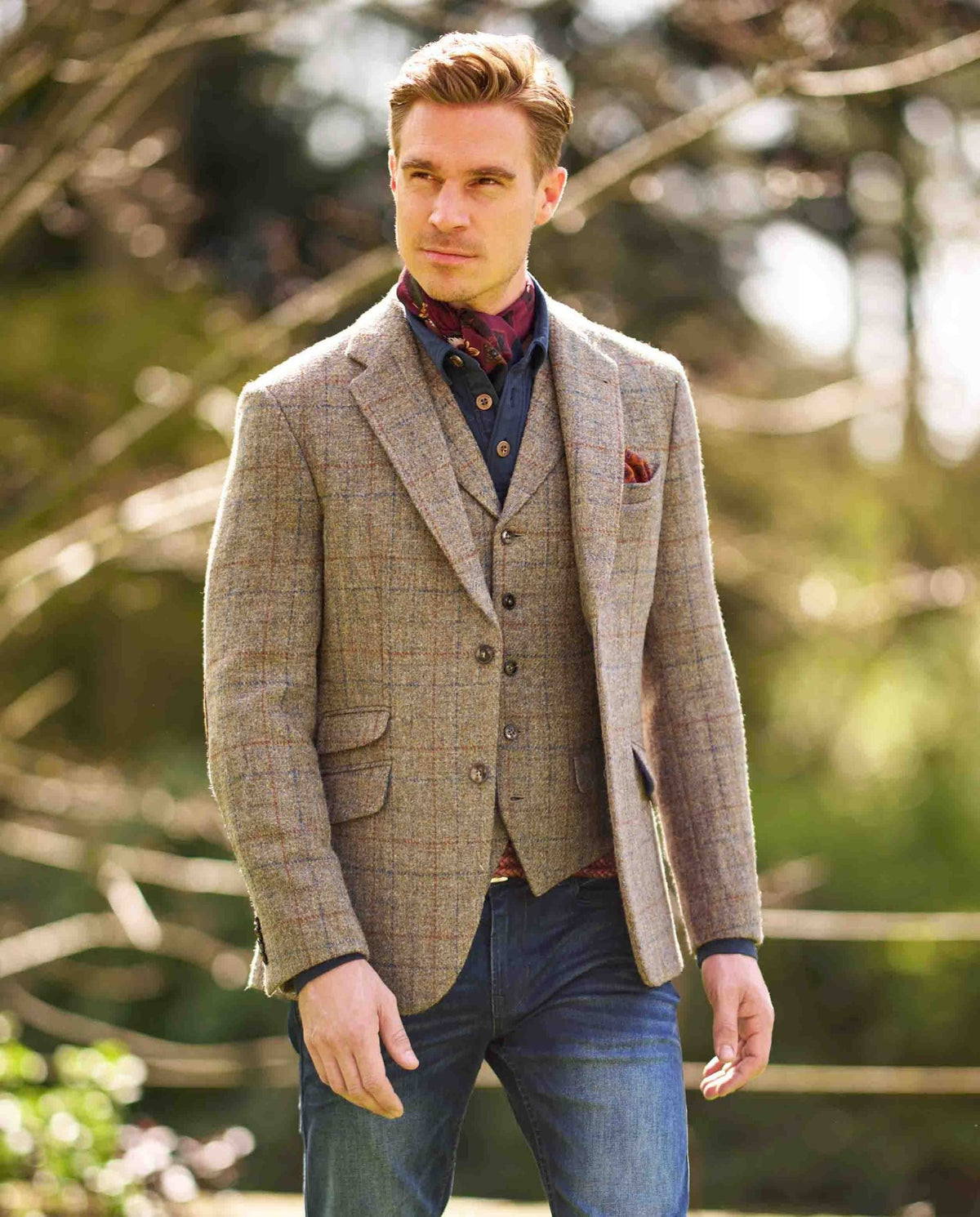
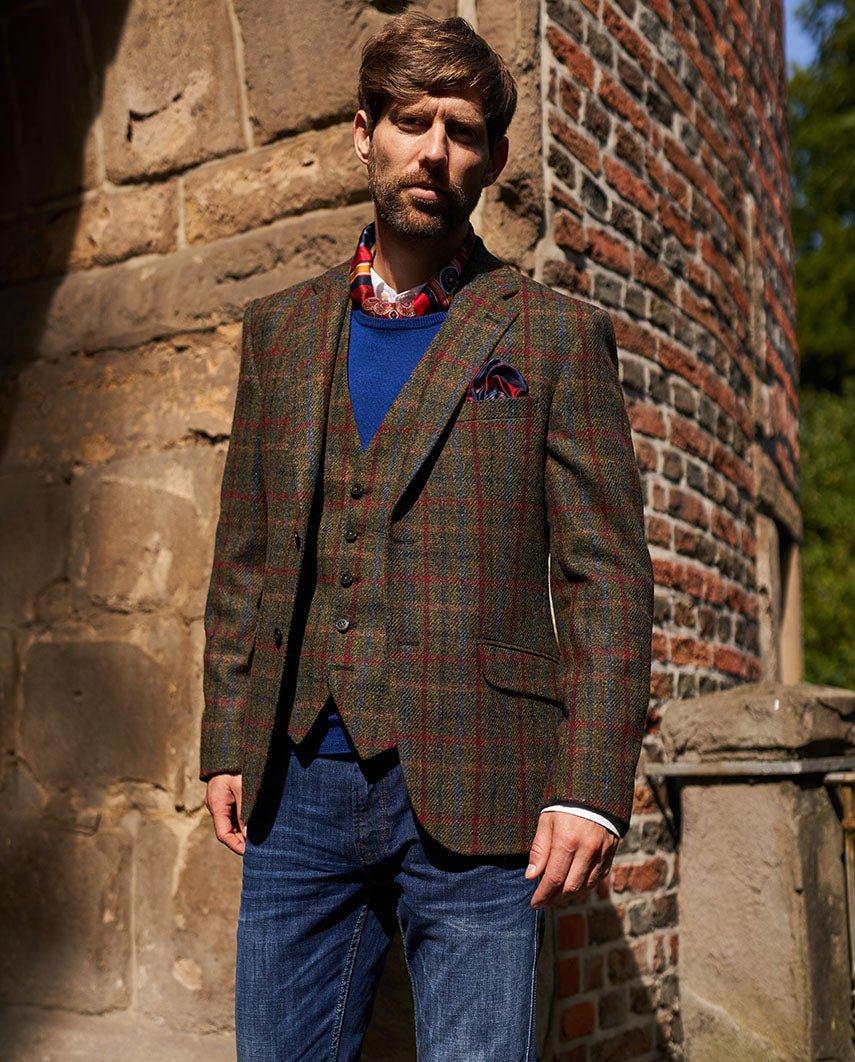
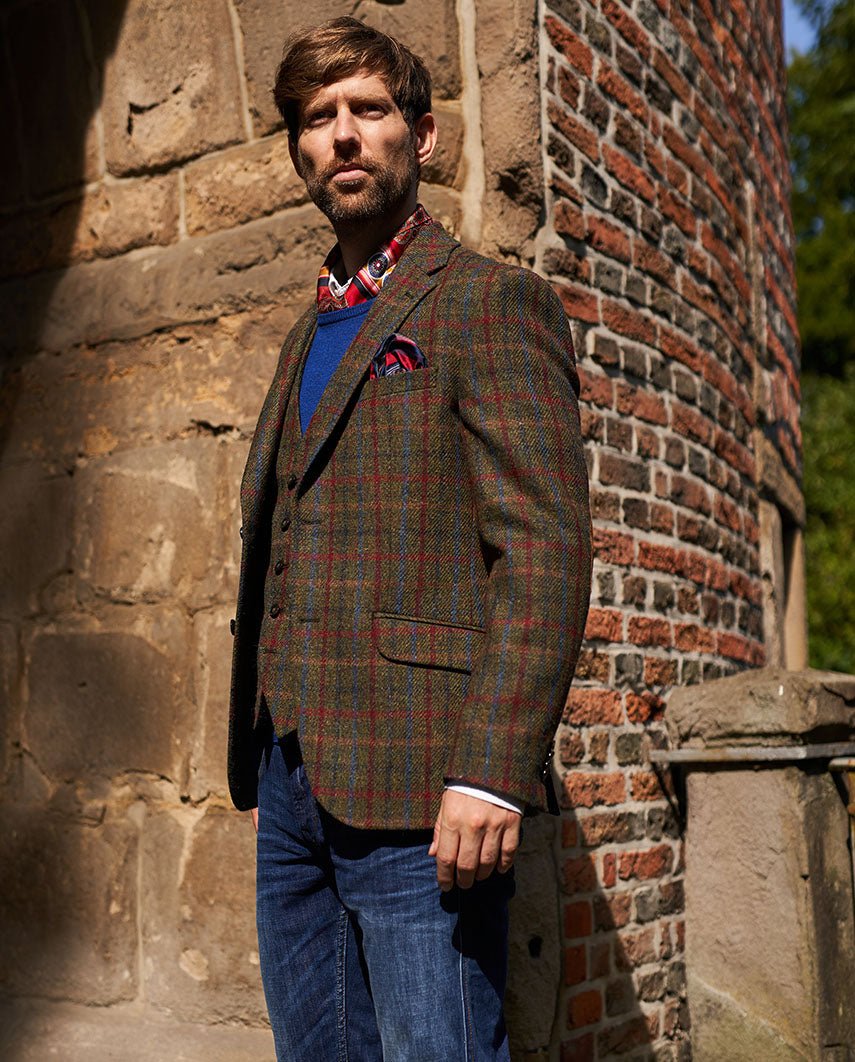
Combining check with check is possible, but requires a confident eye. The key is the contrast in size: a large check, such as a Glencheck jacket, pairs well with a significantly smaller check, such as a fine Tattersall shirt. If both are in a related, muted colour palette, a harmonious look is created. Two equally large, bold checks next to each other, however, can quickly look busy.

Harris Tweed jacket "London" in Blackwatch with checked shirt
Which check is suitable for the office?
Fine, subtle checks are suitable for the office. A grey or anthracite Glencheck jacket looks professional yet individual, as does a fine Tattersall shirt under a solid jacket. Bold tartans are better suited to a leisure and country context or should only be used as a small accent, such as over a scarf. By the way, Glencheck comes from the Scottish estate Glenurquhart; with a coloured overcheck, it becomes Prince of Wales, which the future Duke of Windsor made popular.
Combining a checked jacket: Which trousers suit it?
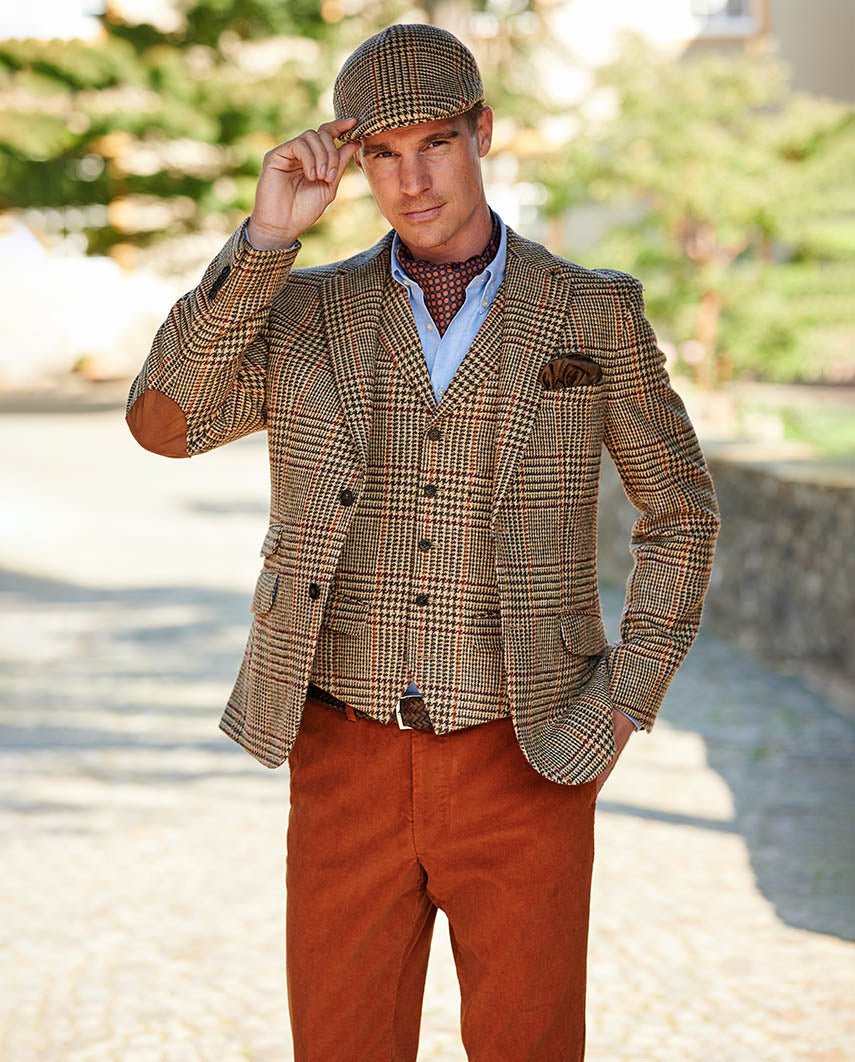
A checked jacket is the eye-catcher, so it should be paired with solid trousers. Grey or anthracite flannel trousers, corduroy trousers in a muted tone or chinos are good choices. Pick up one colour from the jacket's check, and the outfit will look perfectly coordinated. Trousers with a pattern of their own would compete with the jacket and should be avoided.
Looks with checks
Four examples show how checks can be worn for different occasions and by both women and men.
Glencheck jacket for the office
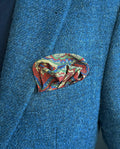
A Glencheck jacket with a white shirt, anthracite trousers and a subtle tie creates a professional yet interesting business look. A fine pocket square in one of the colours from the check completes the look.
Tattersall for a country look
A Tattersall shirt with a checked waistcoat or under a tweed jacket and paired with corduroy trousers creates a classic country look.
Tartan as an accent
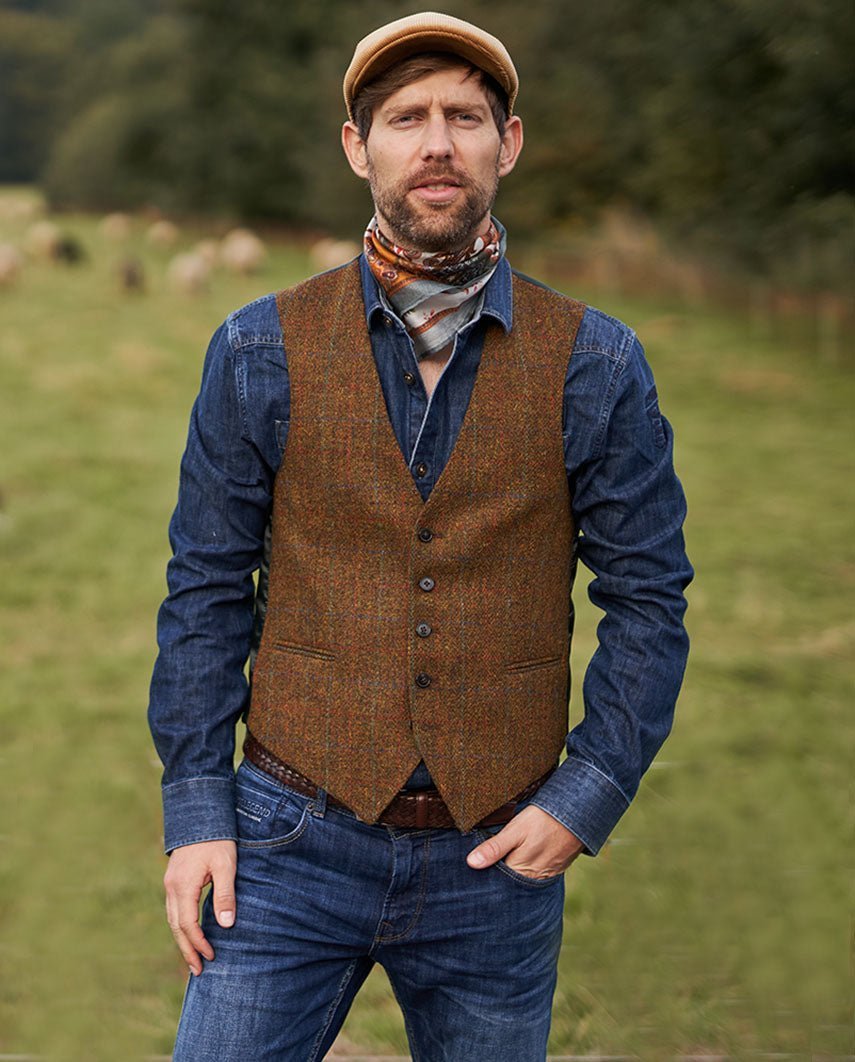
Those who prefer something bolder can use a tartan detail, such as a scarf or checked trousers, as a targeted accent to otherwise calm, solid pieces. This keeps the bold pattern a conscious eye-catcher.
Checks for women
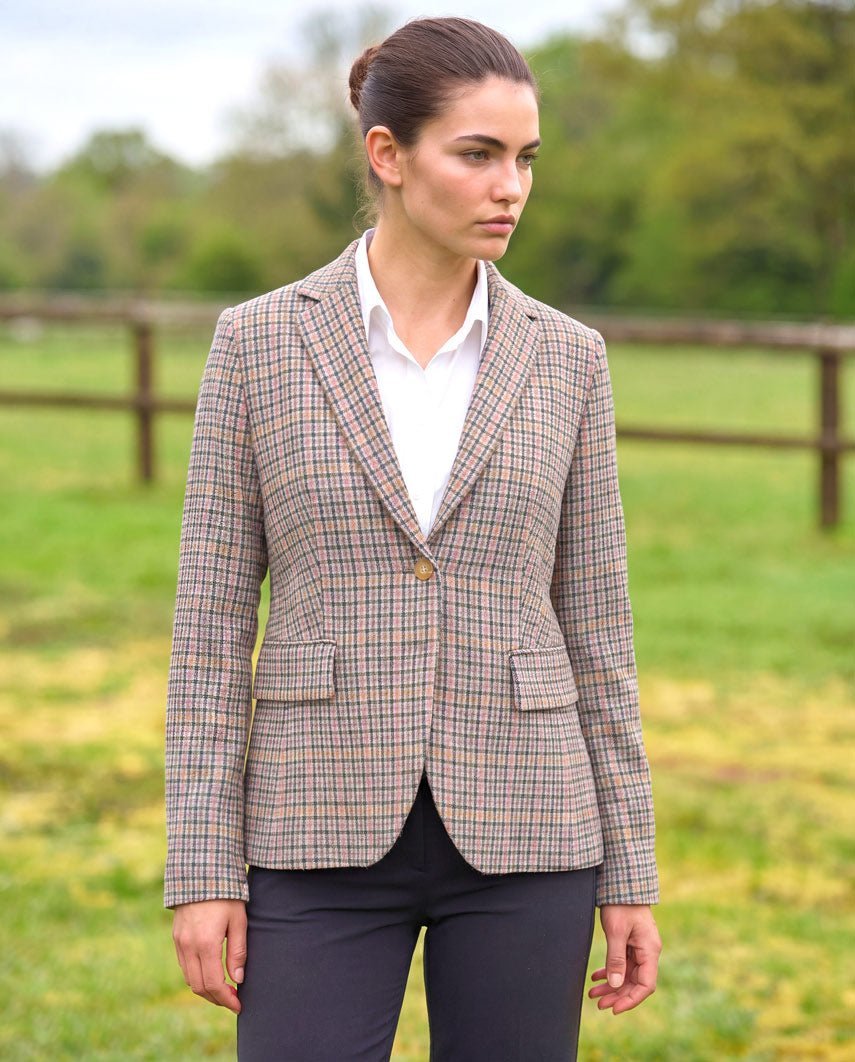
The same principle works for women. A checked blazer with solid trousers or a checked skirt with simple knitwear creates a clear, feminine country look.
Combining a checked shirt
A checked shirt is the easiest way to introduce patterns. A fine Tattersall or Vichy shirt can be worn with solid trousers or chinos, as well as under a solid jacket or jumper. A calm background is also important here: with a patterned shirt, it is best to keep the trousers and top solid. With a fine knit jumper, the collar of the checked shirt peeks out subtly and adds a cosy accent.

Men's "Steward" shirt with button-down collar – the shirt
Checks by season
Checks accompany you throughout the year, but change with the seasons. In autumn and winter, warmer, bolder checks in tweed and wool, such as tartan and Glencheck, come into their own. In spring and summer, lighter, brighter checks such as Vichy and fine Tattersall are more comfortable. Glencheck works well all year round thanks to its understated style.
Colours and checks: suitable combinations
Checks work best in a coordinated colour palette. A grey Glencheck can be combined with white, light blue and a subtle burgundy or blue accent. A green-and-blue Black Watch tartan harmonises with navy, cream and brown. With Tattersall, pick up one of the two grid colours for a waistcoat or tie. As a general rule, the bolder the check, the calmer and more muted the accompanying colours should be.
Common mistakes when combining checks
A few mistakes can be easily avoided. The most common is wearing too many patterns at once, which makes the outfit look busy. Two equally large, bold checks next to each other or too many competing colours are also unsuitable.
Checked classics from Wellington of Bilmore
Wellington of Bilmore offers checked classics from the checked jacket to the checked waistcoat and checked trousers, as well as women's models. Read more about combining jackets in the guide to jackets and blazers.
Frequently asked questions about checks
What types of checks are there?+
The most important checks include tartan, Glencheck, Tattersall, houndstooth and Vichy. They differ in size, colour and origin.
How can you combine checks without looking busy?+
Choose a calm, solid base, opt for a single statement check, contrast sizes and limit the colour palette.
Can you combine check with check?+
Yes, if the sizes differ significantly. A large check pairs well with a significantly smaller one, as long as the colour palette matches.
What is Tattersall?+
Tattersall is a fine grid pattern of two colours on a light background. It comes from the London horse market Tattersall and is typical for country shirts and waistcoats.
What does Glencheck suit?+
Glencheck is understated and highly versatile. As a jacket, it is suitable for the office and pairs well with solid trousers, and it can also be combined with fine patterns.
Which check is suitable for the office?+
Fine checks such as Glencheck and Tattersall are suitable for the office. Bold tartans are better suited to a leisure context or can be used as a small accent.
Which trousers go with the checked jacket?+
A solid-colored pair of trousers goes well with the checked jacket, such as grey flannel trousers, corduroy trousers, or chinos in one of the colours from the check.