
Key takeaways
What is virgin wool?
Virgin wool is wool obtained by shearing live sheep. The term describes the origin of the fiber, not the breed of sheep. It is new, unused wool that comes directly from the animal and not from recycled textiles.
This makes virgin wool the classic natural fiber behind many heritage materials. Whether as tweed, fine knitwear, or a wool coat, high-quality clothing is usually made from virgin wool.
Where does virgin wool come from? From sheep to fiber
Virgin wool is produced by shearing sheep, which usually takes place once or twice a year and is gentle on the animals when carried out professionally. After shearing, the fleece is sorted, cleaned, and washed before being spun into yarn. Important countries of origin include Australia, New Zealand, and Great Britain.
The quality of the wool depends on the breed of sheep, the conditions in which it is kept, and the care taken during processing. Fine, long fibers produce an exceptionally high-quality, uniform yarn that is easy to work with and long-lasting. Short fibers, on the other hand, cause pilling.
Difference between wool and virgin wool
The term wool is broader than virgin wool. Wool can also refer to recycled fiber obtained from old textiles, known as reprocessed wool. Such fibers are often shorter and less durable due to recycling.
Virgin wool, on the other hand, expressly refers to new wool from a live, shorn sheep. The fiber is undamaged, long, and elastic. That is precisely why the virgin wool label is an indicator of quality, representing fresh, high-quality wool.
What does 100% virgin wool mean?
The designation 100% virgin wool or pure virgin wool means that a garment is made entirely from new, shorn wool, apart from minor manufacturing tolerances. It therefore contains no recycled fibers and no significant additions of other materials.
A well-known sign of pure virgin wool is the wool seal. It indicates that the wool used meets purity and quality requirements. For the buyer, the designation is therefore a reliable indicator of a high-quality wool product.

Clubsakko "Mensclub MF Suit" in navy made from Super-100’s virgin wool
Virgin wool or merino wool?
A common question is whether virgin wool and merino wool are the same. The answer: Merino wool is a particularly fine type of virgin wool that comes from the merino sheep. Every merino wool is therefore virgin wool, but not every virgin wool is merino wool.
The difference lies in the fineness of the fiber. Merino wool has a very small fiber diameter, usually under 24 microns, and is therefore particularly soft and skin-friendly. Classic virgin wool can be somewhat coarser depending on the breed of sheep. For soft garments worn directly against the skin, merino wool is the finer choice, while more robust virgin wool is valued for durable fabrics such as tweed. You can find detailed information in the Merino wool guide.

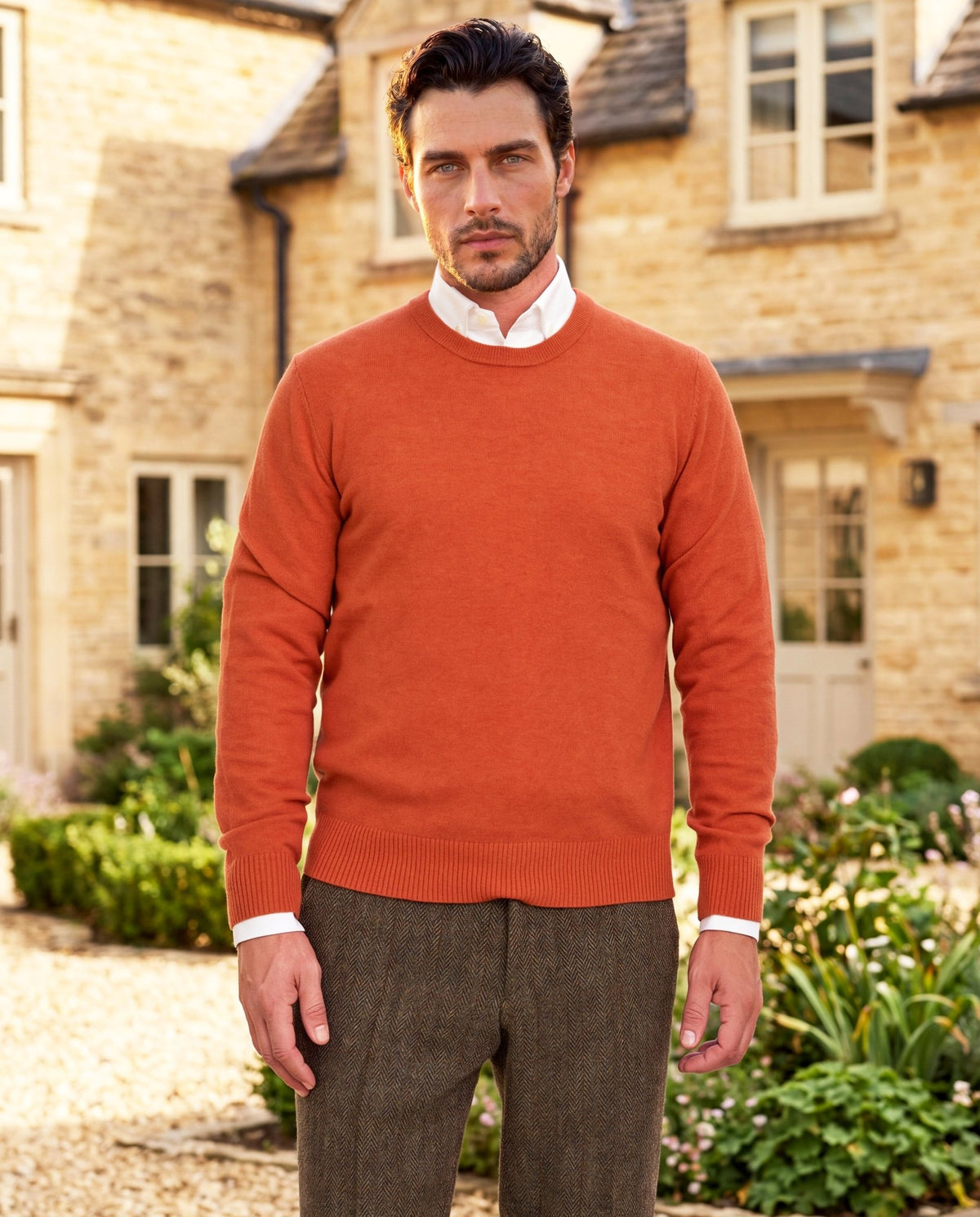
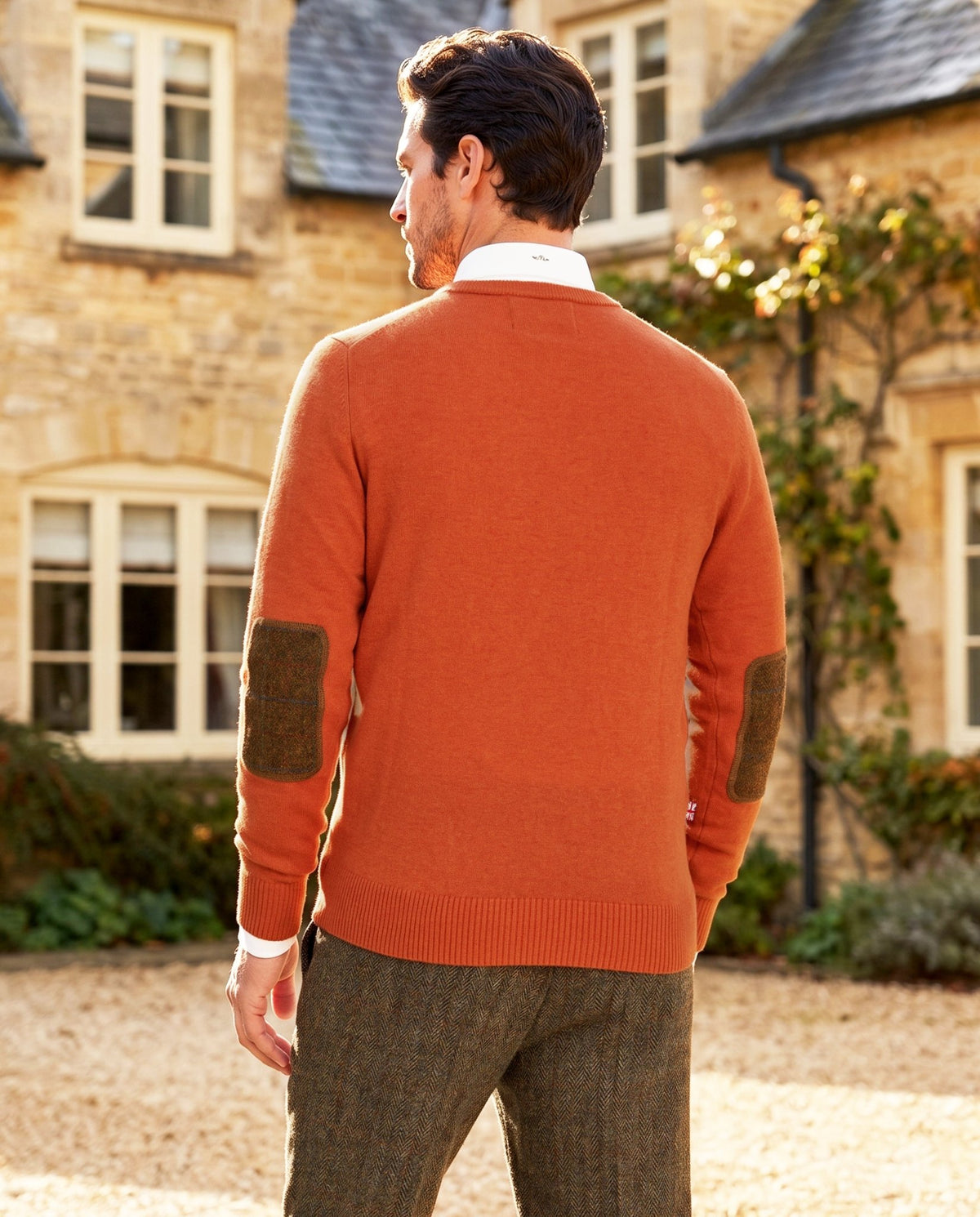
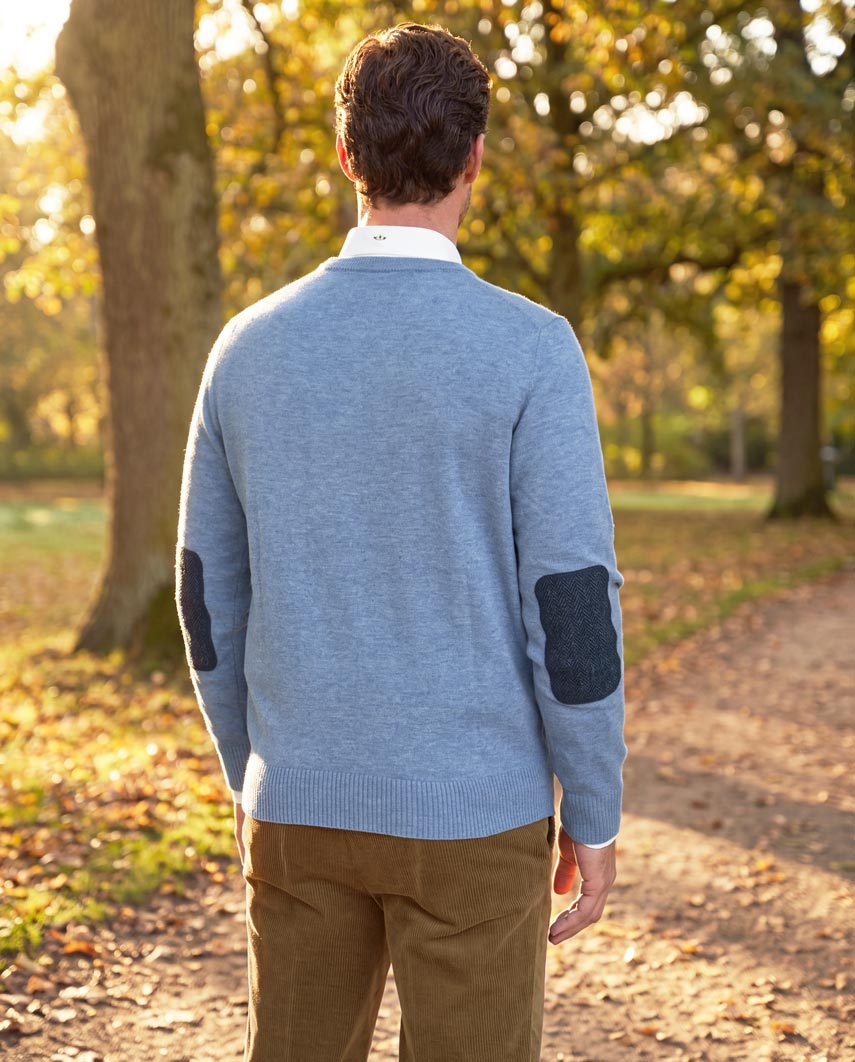
Merino-Lambswool Men's Sweater "Jordan" in burned orange – with Harris Tweed details
Properties of virgin wool
Virgin wool consists of the protein keratin and naturally contains a small amount of wool grease, lanolin. Its fine, natural crimp, known in technical terms as crimp, traps air and gives the fiber many of its properties. These make virgin wool a particularly valued natural fiber.
Warmth and temperature regulation
The crimped fiber traps a lot of air and therefore provides excellent warmth. At the same time, virgin wool regulates temperature and feels neither too warm nor too cool.
Moisture regulation
Virgin wool can absorb up to about 30 percent of its own weight in moisture without feeling wet and releases it slowly. This keeps the wearing experience pleasantly dry even in changing conditions.
Odor-resistant and self-cleaning
Virgin wool is naturally odor-resistant. Often, it is enough to air out a wool garment instead of washing it. This protects the fiber and preserves its shape.
Elastic and shape-retaining
Thanks to its natural crimp, virgin wool is elastic and returns to its shape after wear. Creases often fall out on their own.
Keeps warm even when damp
One special feature is that virgin wool still provides warmth even when damp. This property makes it a reliable material for the cool and changeable season.
Flame-retardant
Wool is naturally flame-retardant. It is difficult to ignite, barely continues to burn on its own, and does not melt like many synthetic fibers. This makes virgin wool a safe and comfortable material.
Dirt-resistant and wrinkle-resistant
The surface of virgin wool is naturally dirt-resistant, and small creases often fall out on their own when aired. This makes wool clothing easy to care for in everyday life and pleasantly suitable for travel.
Benefits of virgin wool at a glance
-
Warming and temperature-regulating
-
Absorbs moisture without feeling wet
-
Odor-resistant and self-cleaning by airing
-
Elastic and shape-retaining due to the natural crimp
-
Keeps warm even when damp
-
Dirt-resistant and wrinkle-resistant
-
Naturally flame-retardant
Is virgin wool scratchy?
Whether virgin wool is scratchy depends primarily on the fineness of the fiber. As a rough guideline, fibers over about 25 to 30 microns can feel scratchy on sensitive skin, while fine qualities such as merino wool are significantly below this. Scratchiness is therefore not a sign of poor quality, but rather a matter of fiber thickness. Those who react sensitively should choose fine virgin wool or wear a garment underneath.
Virgin wool in clothing
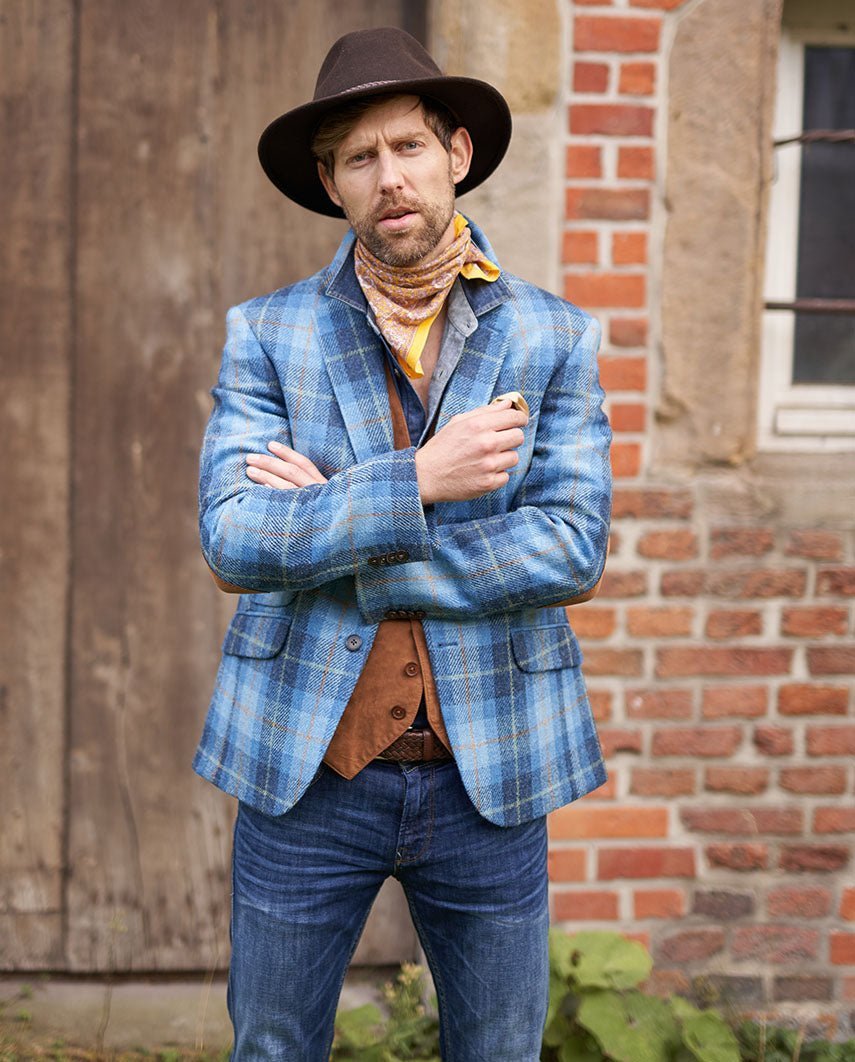
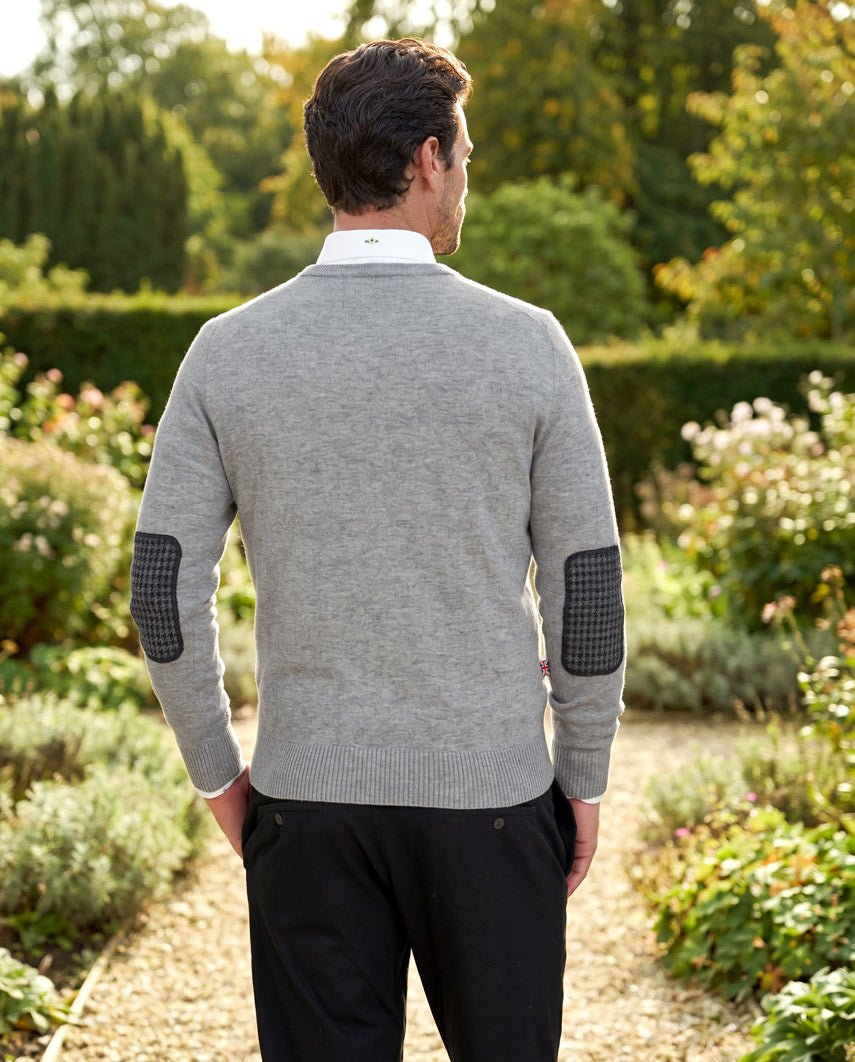
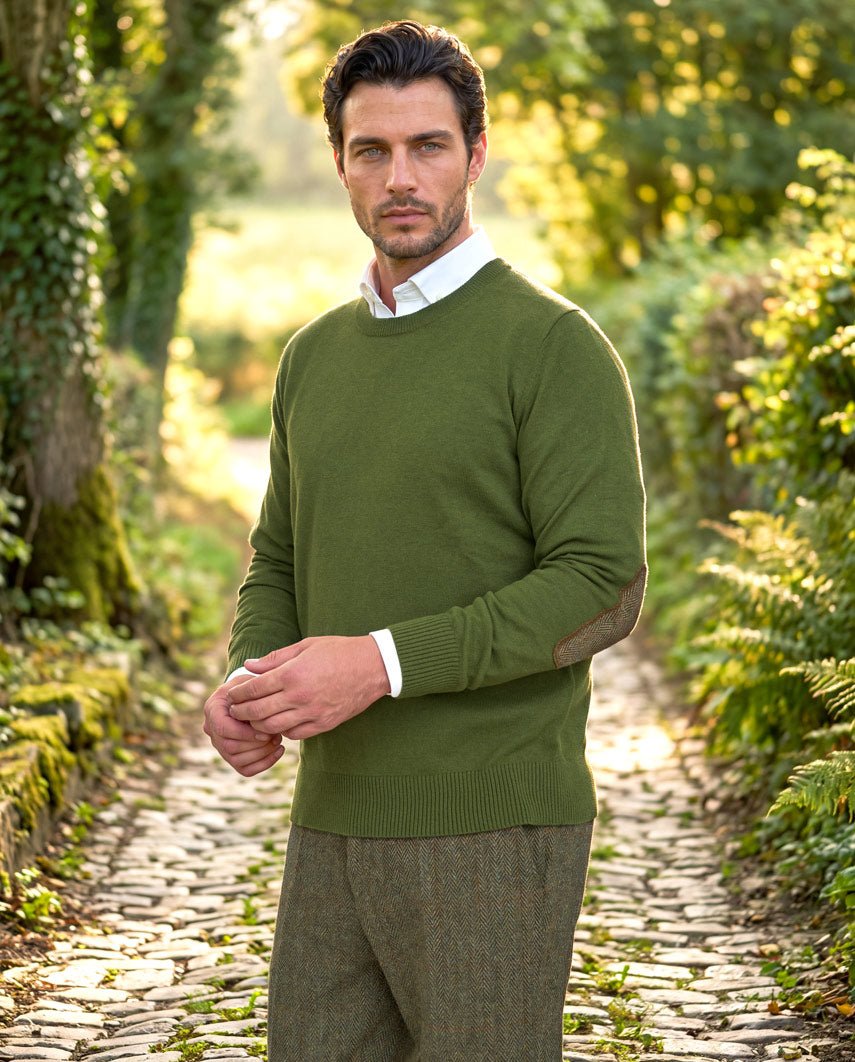
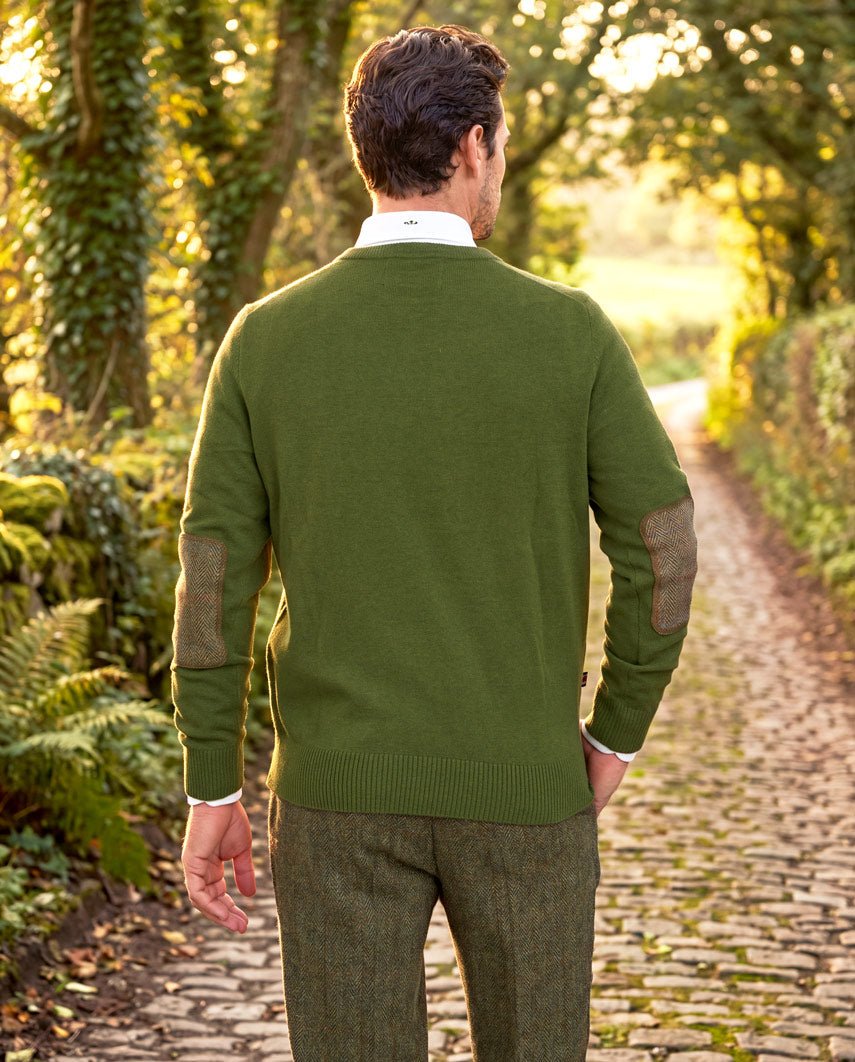
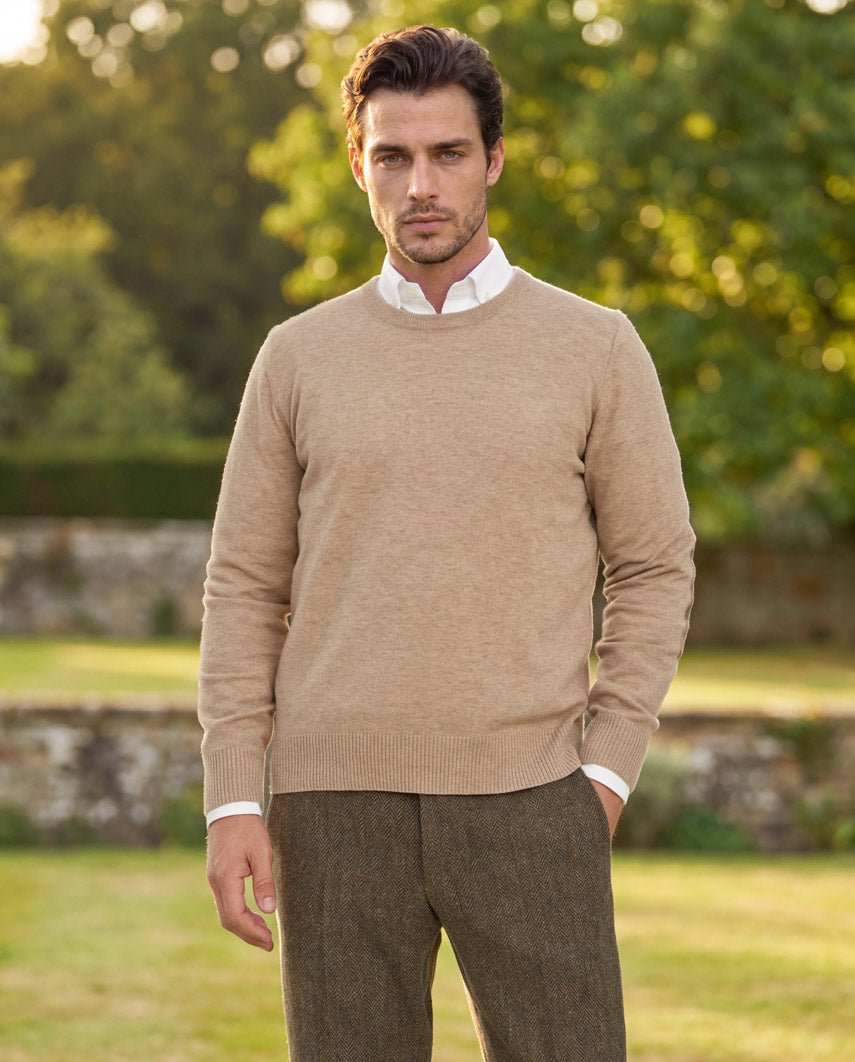
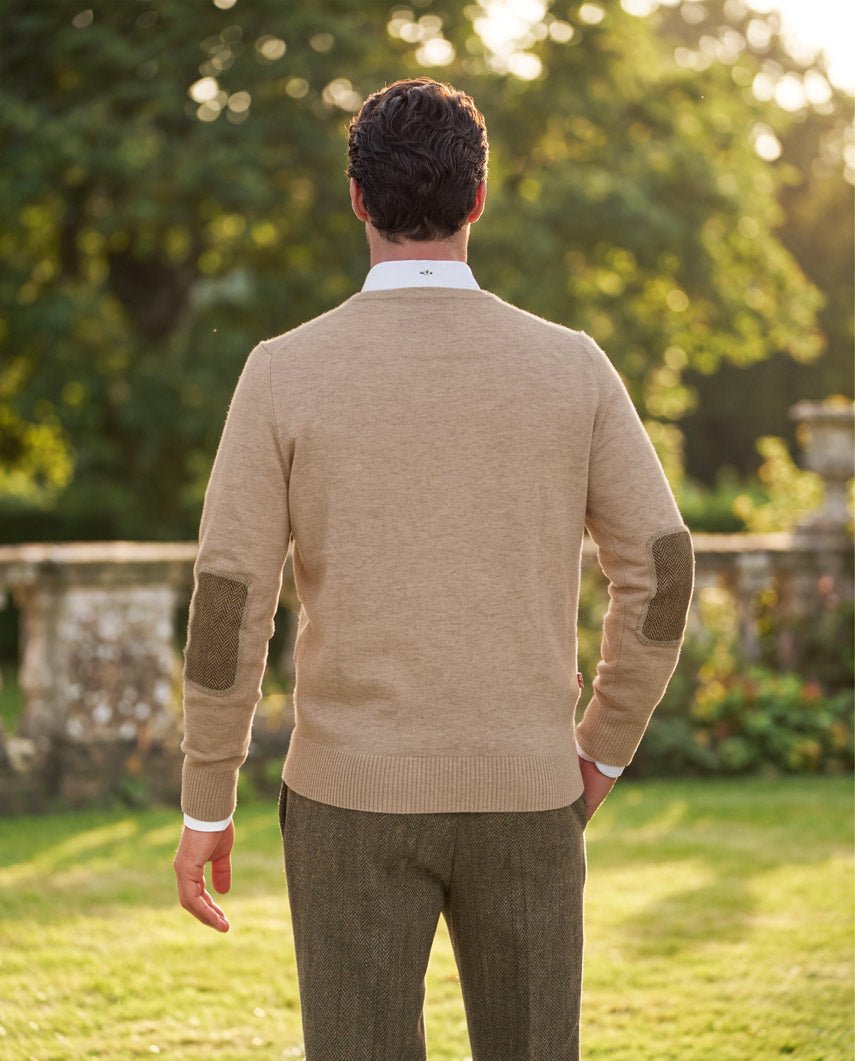
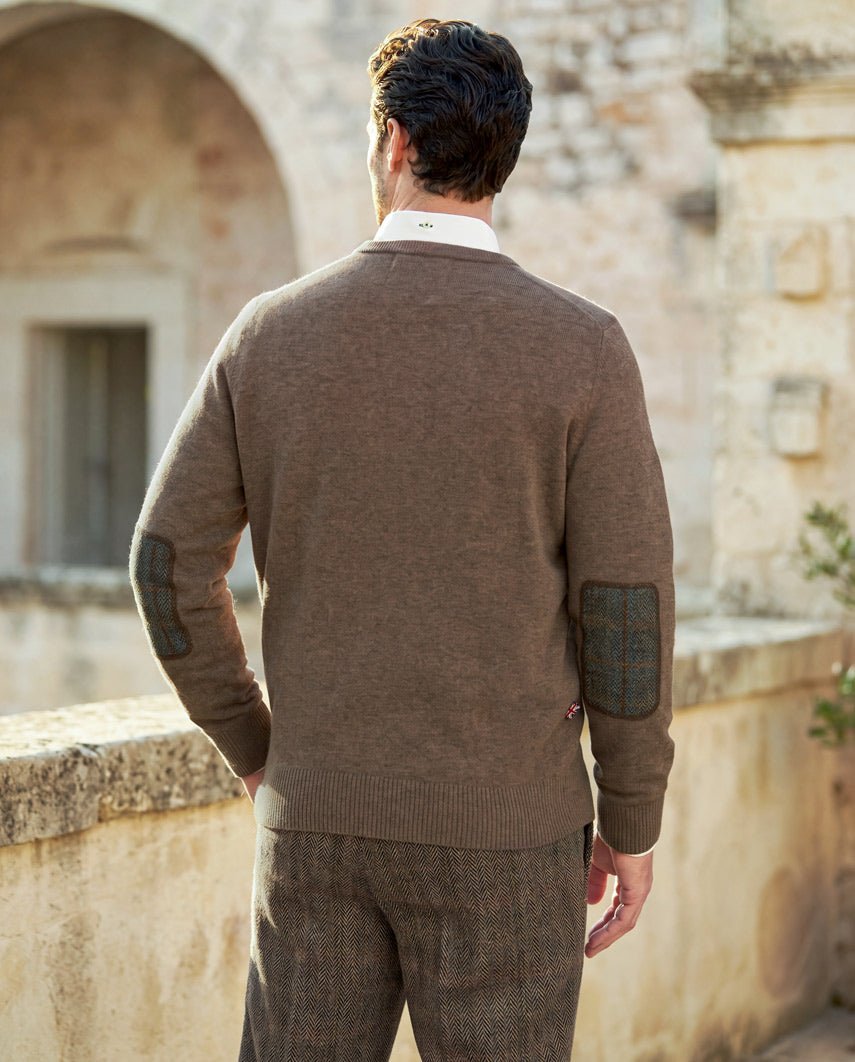
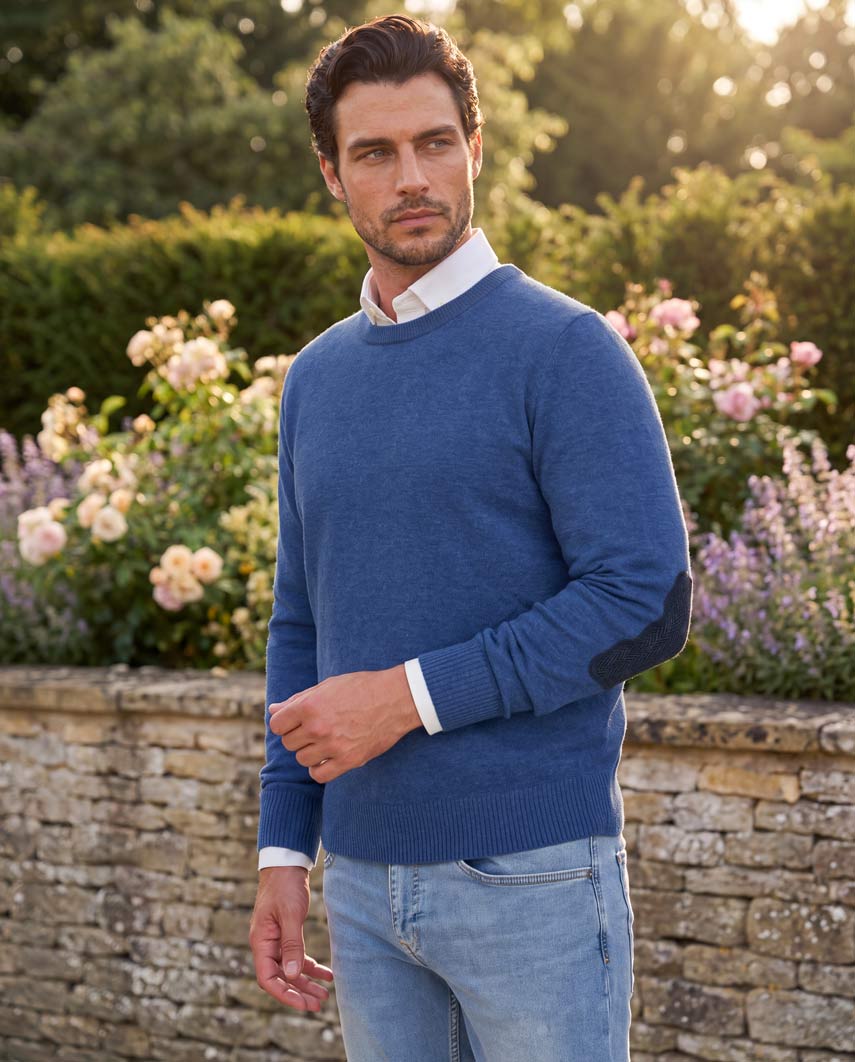
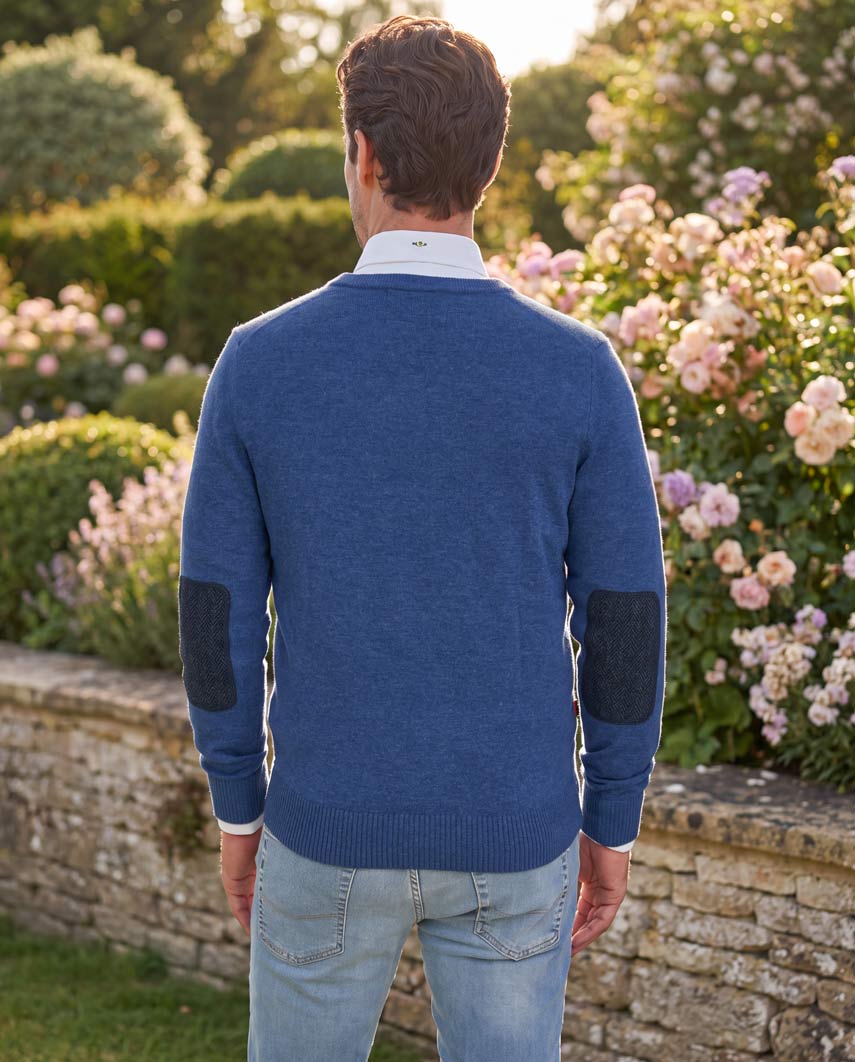
Virgin wool is highly versatile in clothing. As Harris Tweed it forms the basis for robust jackets and coats, as fine knitwear it provides warming sweaters and cardigans, and in a wool coat it combines warmth with a clean silhouette. Depending on the fiber thickness, the range extends from robust, textured fabrics to soft, fine qualities.
Virgin wool, merino wool, and cashmere at a glance
Virgin wool is the general term for new wool from a shorn sheep. Merino wool is a particularly fine virgin wool from the merino sheep and is therefore softer. Cashmere on the other hand does not come from a sheep, but from the fine undercoat of the cashmere goat and is considered one of the finest fibers. In short: merino wool is a type of virgin wool, while cashmere is its own particularly fine fiber.
Lambswool: Virgin wool from the first shearing
Lambswool is a common term. It refers to particularly soft virgin wool from the first shearing of a young lamb. This wool is finer and softer than wool from later shearings and is often used for high-quality, comfortable knitwear.
Sustainability of virgin wool
Virgin wool is considered a relatively sustainable fiber. It is a renewable raw material, biodegradable, and, with proper care, durable for many years. This longevity is an important sustainability aspect, as a garment that is worn for a long time conserves resources.
When it comes to animal welfare, it is worth looking at the origin and certification. Standards such as mulesing-free wool or the Responsible Wool Standard provide indications of responsible animal husbandry. Those who pay attention to quality and origin combine the benefits of the fiber with responsible purchasing.
Washing and caring for virgin wool: step by step
Virgin wool is easy to care for if you handle it gently. Four steps preserve its softness and shape. Washing is usually unnecessary; airing it out and spot-treating small stains is often sufficient.
Check the care label and air out. The information on the label is decisive. Often, airing the garment in the fresh air or freezing it overnight is enough to remove odors without washing.
Wash gently. Wash virgin wool by hand or in a wool cycle at around 30 degrees with a mild wool detergent. Avoid regular fabric softener, as it can damage the fiber.
Do not wring. Gently press out the water so that the fiber does not become matted.
Shape and dry flat. Shape the garment while it is damp and dry it flat on a towel. Do not put virgin wool in the dryer, as it may become matted and shrink.
Proper storage is also part of the care. Store virgin wool clean, dry, and protected from moths, and fold knitwear instead of hanging it to prevent it from stretching. Air out garments stored over the summer occasionally and check them periodically.
Our advice: When storing garments over the summer, protect wool items from clothes moths. You can read how to do this in the guide to moth protection.
Virgin wool at Wellington of Bilmore
Wellington of Bilmore uses virgin wool in many core products, from Harris Tweed to fine knitwear and wool coats. The fiber represents warmth, durability, and a British-inspired, timeless style, fitting into a wardrobe that values quality and longevity.
Frequently Asked Questions About Virgin Wool
What is virgin wool?+
Virgin wool is new wool that is shorn from live sheep. The term describes the origin of the fiber, not the breed of sheep.
What is the difference between wool and virgin wool?+
Wool is a general term and can also refer to recycled reprocessed wool. Virgin wool expressly refers to new wool from a live, shorn sheep.
Is virgin wool scratchy?+
It depends on the fineness of the fiber. Coarser wool can feel scratchy, while fine qualities such as merino wool are soft and skin-friendly.
How do you wash virgin wool?+
Wash virgin wool by hand or on a wool cycle at a low temperature with wool detergent. Do not wring and dry flat.
Virgin wool or merino wool, which is better?+
Merino wool is a fine type of virgin wool and is particularly soft on the skin. Traditional virgin wool is often more durable. Both have their strengths depending on the use.
What does 100% virgin wool mean?+
This means that the item is made entirely from new, shorn wool, without recycled fibers or significant additives.
Does virgin wool also keep you warm when wet?+
Yes. Virgin wool still keeps you warm even when wet, and is therefore well suited for cool, changeable conditions.